
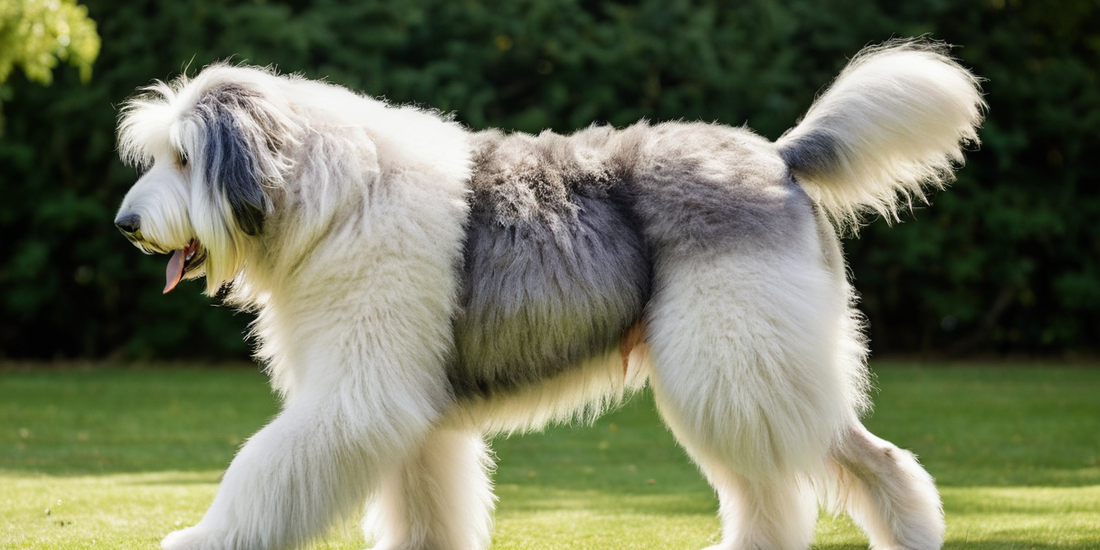
With its shaggy, tousled coat and cosy bear-like gait, the Old English Sheepdog looks at first glance like a walking cuddly toy. Anyone who lives with a Bobtail, however, knows that behind the plush facade is an alert, clever and very people-oriented herding dog that relies on being part of the family, on enrichment and on regular coat care. In this guide you'll find out where the Bobtail comes from, how it ticks, what matters for training and coat care, and how to feed it correctly.
Profile and temperament
The Bobtail, officially called the Old English Sheepdog, is a large, powerfully built herding dog from England. Males reach a shoulder height of around 61 centimetres, with females just below that. Despite its dense coat, which makes it look even more massive, the Bobtail is an athletic dog with surprising agility. Its weight usually ranges between 27 and 45 kilograms, depending on sex and build.
In terms of character, the Bobtail is one of the most balanced breeds there is. It's considered good-natured, playful and extremely affectionate, without being clingy in a tiresome way. Towards strangers it's initially reserved to watchful, but usually warms up quickly. Within the family it develops a close bond with all members, including children, with whom it's generally patient and gentle. Its herding instinct can certainly show itself, for example when it tries to keep the family together on a walk.
Important to know: the Bobtail is not a dog for a third-floor flat with no exercise space. It needs room, exercise and, above all, time for its coat care. Anyone who plans for these points gets a loyal, good-humoured and surprisingly gentle companion.
Origin and history
The Bobtail's roots lie in south-west England, presumably in the counties of Devon, Somerset and Dorset. There, the breed was used in the 19th century as a droving dog for cattle and sheep. Farmers and drovers needed a robust dog with a dense, weatherproof coat that could drive herds over long distances to market while standing up to inhospitable weather.
The name Bobtail goes back to a historical practice: working dogs that counted as exempt from tax on droving dogs used to be docked, meaning their tails were shortened. The English term "bob" refers to a short, docked tail. Today, docking is banned in most countries on animal welfare grounds, which is why modern Bobtails usually keep their bushy tail in full.
In the late 19th century, the Bobtail found its way onto British dog shows and developed from a pure working dog into a popular family and show dog. Its striking appearance, the combination of strength and friendliness, quickly made it a public favourite, still appearing today in films, adverts and children's books as a good-natured "cuddly giant". More has survived from its work as a herding dog than you might think: intelligence, stamina and a fine sense for its people.
Training and mental stimulation
A Bobtail is clever, keen to learn and generally very cooperative, provided training is consistent, patient and free of harshness. Because of its size and herding instinct, early, thorough socialisation at puppy age is worthwhile, so it learns to channel its energy and urge to move appropriately. Basic obedience, lead manners and a reliable recall are among the most important building blocks, especially since an adult Bobtail can certainly develop some strength on the lead.
Enrichment is not a nice-to-have for this breed, but a must. As a former working dog, the Bobtail needs both physical exercise and mental stimulation. Long walks, free running in a safe environment and tasks such as scent or retrieving games keep it content. Dog sports such as agility, obedience or rally obedience also suit its agile build and its mind, which likes to think along. If a Bobtail is underchallenged, it can tend towards loud barking or unwanted herding behaviour, for example trying to "round up" joggers or cyclists.
If you're wondering whether the Bobtail suits your lifestyle, it's worth taking a look at our breed finder. There you can match typical breed traits with your everyday life, from space requirements to exercise needs to grooming effort.
The right diet for the Bobtail
As a large, muscular dog with a formerly high working output, the Bobtail needs needs-based, high-quality feeding. A balanced ratio of high-quality animal protein, healthy fats and well-tolerated carbohydrate sources is important, adjusted to age, activity level and weight. Especially during puppyhood and adolescence, the diet should support the growth of the large joints, while in adulthood the focus shifts to maintaining muscle mass, joints and a healthy weight.
Whether dry or wet food suits better depends on individual preferences, digestion and daily routine. Many Bobtail owners combine both: a filling dry food as a base and wet food for extra moisture and variety. In our dry food category you'll find recipes with a high meat content and without unnecessary fillers, and in the wet food category, moist alternatives that go down particularly well with fussy eaters or older Bobtails.
Since every dog is different, it's worth taking an individual look at food requirements. With our food finder you can work out in just a few steps which food suits your Bobtail's age, size, activity and any sensitivities. As a general rule, keep the amount of food matched to body weight, as excess weight puts additional strain on the joints and cardiovascular system in this large breed.
Chews and chew items
Chewing is one of the most natural activities for the Bobtail. It relieves stress, keeps the teeth clean and provides worthwhile rest periods between long walks. Because of its size and powerful jaws, robust, long-lasting chews that withstand chewing pressure while remaining well tolerated are well suited for the Bobtail.
In our natural chews category you'll find products that do without artificial additives and keep the Bobtail happily occupied for a long time. For in between, as a training reward or a small treat, our natural treats are well suited, and can also be easily portioned to keep the daily ration in check.
Because not every chew suits every size and every chewing type, our chew finder helps you find the right product for your Bobtail, whether it chews away leisurely or tackles things with full-body commitment. That way you can make sure the chew is neither too small nor used up too quickly.
Coat care and health
The dense, shaggy double coat is the Bobtail's trademark, but it's also the most demanding part of keeping this breed. Without regular care the coat quickly matts, especially behind the ears, in the armpits and around the hind legs. Ideally, you should brush your Bobtail thoroughly down to the skin several times a week, with intensive coat care a short daily combing is also enough. A good brush and an undercoat comb are part of the basic kit.
The eye area also deserves attention: coat that's too long can restrict vision and cause irritation, which is why many owners regularly trim or tie back the facial hair. Because the dense coat allows good ventilation, the ears should be checked regularly so infections can be spotted early. A coat change in spring and autumn means additional grooming effort, but this can be well planned for with regular brushing sessions.
Health-wise the Bobtail is generally a robust breed, but like many large-growing dogs it's prone to certain hereditary conditions. These include hip dysplasia, certain eye diseases and, in rarer cases, heart problems. A reputable breeder with appropriate health screening of the parent animals is therefore especially important when getting a Bobtail. Regular vet check-ups, appropriately adjusted exercise during growth and needs-based nutrition further support a healthy, long dog's life.
Frequently asked questions
How much coat care does a Bobtail really need?
Plan for several thorough brushing sessions a week, and daily during the coat change. Without this routine the dense double coat quickly matts and grooming becomes considerably more laborious and uncomfortable for the dog. Anyone put off by the time involved should also plan for professional grooming at a dog groomer.
Is the Bobtail also suitable for beginners?
Generally yes, provided there's enough time for coat care, exercise and enrichment. The Bobtail is friendly, cooperative and easy to train, which works in beginners' favour. What matters most is realistically planning for the high grooming and stimulation requirements from the start and not underestimating them.
How much exercise does a Bobtail need per day?
As a former working dog, it needs several extended walks a day plus additional mental stimulation, for example through dog sport or scent games. Short toilet walks alone aren't enough for this active breed in the long run and can lead to restlessness or unwanted behaviour.
Does the Bobtail shed a lot?
Despite its dense coat, the Bobtail sheds moderately compared with some other breeds, but loses noticeably more hair during the coat change. Regular brushing noticeably reduces the amount of hair in the home while also keeping the coat healthy and free of matting.
Character & who the Bobtail suits
In short, the Bobtail is best suited to: families with space and time for coat care, looking for a gentle shaggy companion.
- Size: very large (giant)
- Energy level: medium
- With children: very good with children
- Flat living: not really suited to flat living
- For beginners: with some experience
- Coat care: high-maintenance coat
- Trainability: eager to learn
- Alertness: watchful
Not sure whether this breed suits your life? Find out with our breed finder "Which dog breed suits me?".
Also worth reading: Which chew suits my dog?





