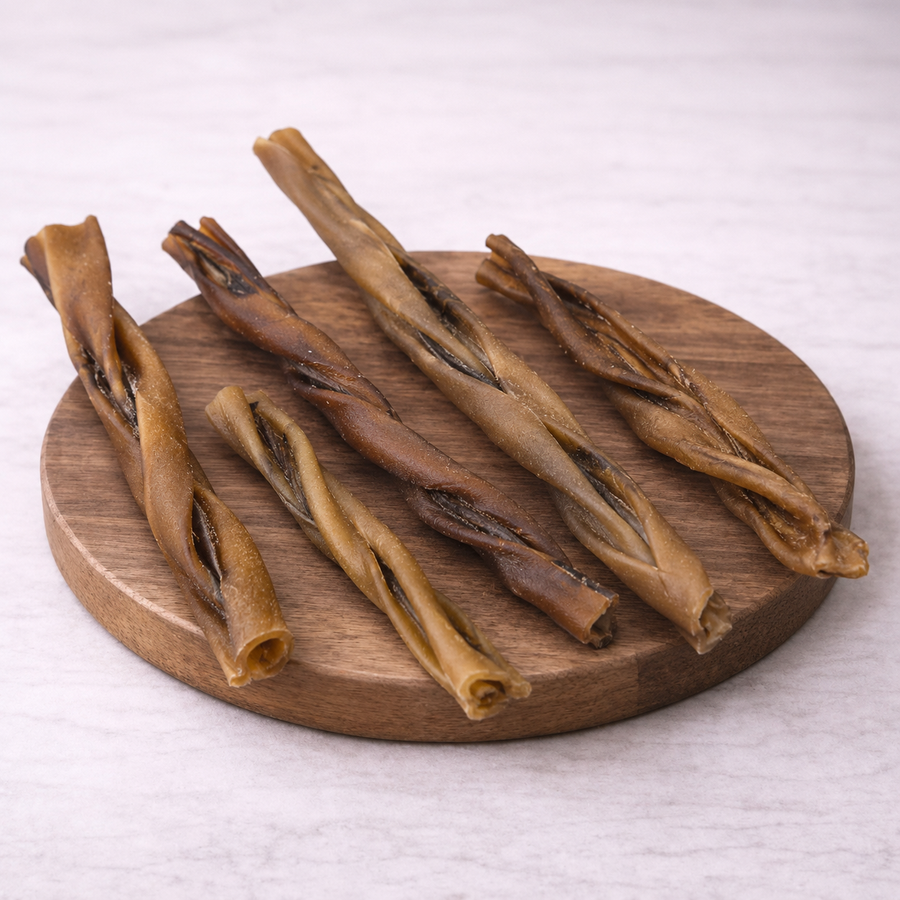
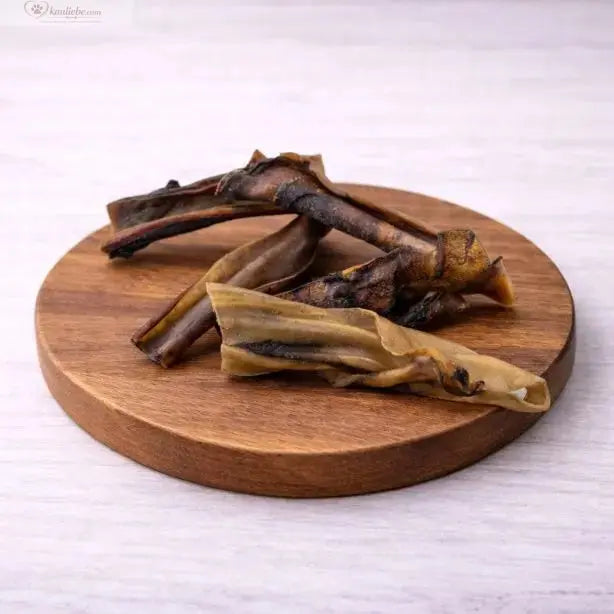
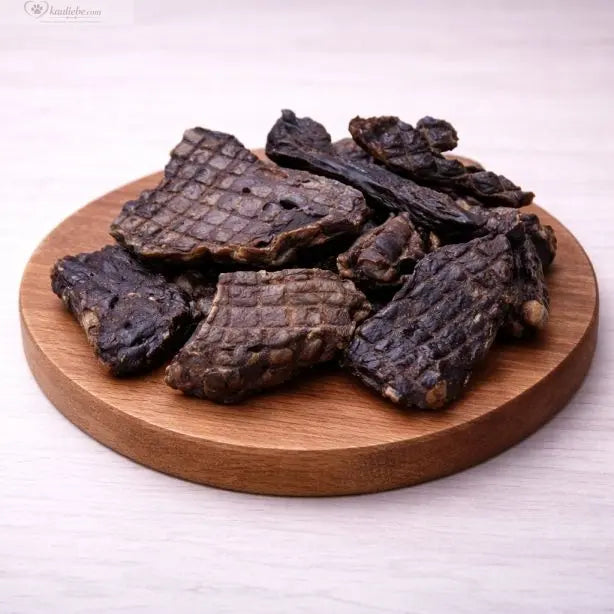
For dogs that have tried almost everything, or for an elimination diet requiring an especially rare protein source, we offer exotic chews. These include camel skin plait, camel head skin and the large camel head skin slab in 500g, as well as dried reindeer liver.
All snacks are air-dried, single-source and free from additives. Camel and reindeer are among the rarest protein sources fed to dogs and are therefore often still an option for dogs with multiple intolerances, in consultation with our team.
From the handy camel head skin to the large camel head skin slab in 500g, curious dogs of every size will find a suitable exotic option to keep everyday chewing exciting, even if your dog already knows almost every common protein source. The camel skin plait is also well suited to more persistent chewers.
Dried reindeer liver is a nutrient-rich but calorie-dense chew extra and is better suited to use as a sparingly dosed reward than as a daily chewing activity. For dogs that already struggle with several common protein sources, reindeer can be an interesting alternative as an especially rare option.
Anyone working through a multi-stage elimination diet with their dog and who has already excluded beef, chicken, lamb and horse will find one of the last untried options in this category.
As camel and reindeer are barely known as everyday proteins in Germany, our exotic chews are particularly suited to experienced owners who have already tried several other protein sources and are specifically looking for a new option. The easiest way in is via the smaller camel head skin, before offering larger pieces such as the camel head skin slab in 500g. Due to its high nutrient content, dried reindeer liver is better suited to use as a sparingly dosed reward than as a regular chewing snack. This rounds off our chew range with an exotic category for exactly those cases where more common proteins such as beef, chicken, lamb or game have already been excluded. Anyone offering the exotic varieties for the first time should start with small amounts despite the mild recipe and watch the dog's reaction closely over the first few days.
Supervision while chewing is a sensible ground rule for the exotic chews too, especially with larger pieces such as the camel head skin slab. This way, you can keep an eye on how your dog copes with the new texture, particularly on first contact with a still unfamiliar protein source.
Anyone who also alternates with game chews can offer their dog variety across several rare protein sources without having to reach for the same exotic variety too often. This keeps everyday chewing interesting, without any single protein source landing in the bowl too frequently.