
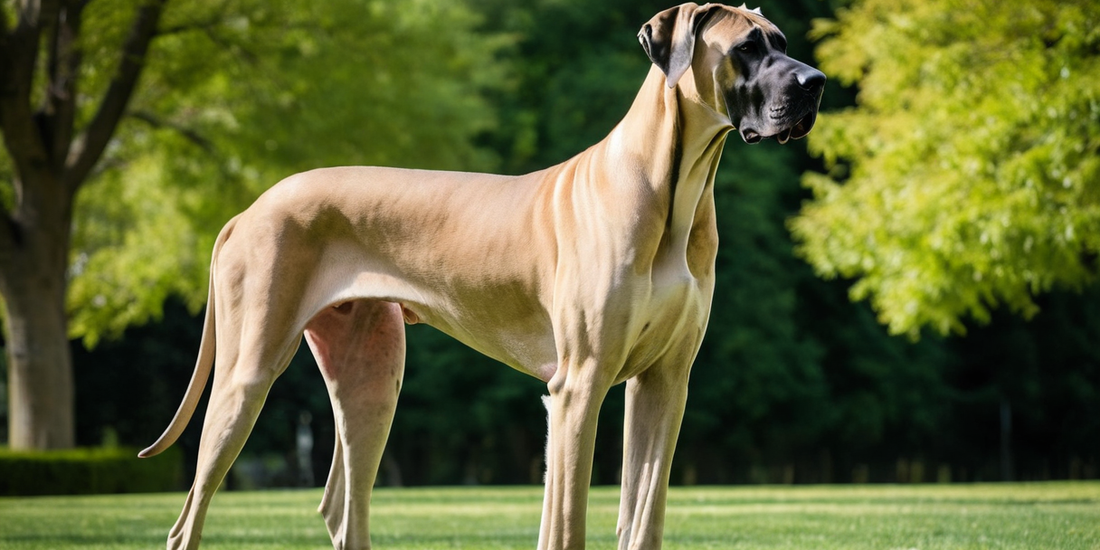
Hardly any breed looks as impressive and yet as calm as the Great Dane. This “gentle giant” can weigh up to 90 kilograms, yet is usually quiet, friendly and closely bonded to its family. It is precisely this combination of enormous size and a calm temperament that makes Great Dane nutrition a special task: it does not need an over-the-top power food, but rather a well thought-out, well-tolerated diet that keeps an eye on the muscles, joints and sensitive stomach of this giant breed alike.
The Great Dane in brief: a gentle giant with special needs
The Great Dane is one of the largest dog breeds in the world and clearly belongs in the giant breed category. Despite its imposing stature, it is usually calm, balanced and not prone to being hectic, a quiet sofa companion with a big heart. This temperament should also be taken into account when feeding: calm during meals, fixed routines and a stress-free environment suit the breed's character and support digestion at the same time.
Giant breeds such as the Great Dane unfortunately have a noticeably shorter life expectancy than smaller dogs, often only seven to ten years. This makes high-quality, well-tolerated nutrition from puppyhood onwards particularly important. The foundation for joints, the cardiovascular system and immune defence is laid in the very first months of life, which is meant to give these giants as long and healthy a life as possible later on. Even in old age, which begins noticeably earlier in the Great Dane than in smaller breeds, the food deserves special attention, for example with regard to the joints and a slightly adjusted energy intake.
Preventing bloat: the most important feeding rule
If there is one thing that should take top priority in Great Dane nutrition, it is the prevention of bloat. As a very large, deep-chested breed, the Great Dane is among the dogs at increased risk for this life-threatening emergency, in which the stomach, filled with food or air, twists around its own axis. Even though nutrition alone cannot offer one hundred per cent safety, the risk can be significantly reduced through sensible feeding.
Several small meals instead of one large portion
Divide your Great Dane's daily ration into at least two, preferably three, smaller meals instead of feeding it once a day with one large portion. A stomach that is fully packed and heavy noticeably increases the risk of twisting. Smaller portions spread throughout the day relieve the stomach, keep blood sugar levels more stable and suit the calm, balanced nature of the breed well.
Rest before and after eating
Directly after eating, your Great Dane should not move around wildly, romp about or play boisterously. Plan a rest period of at least one to two hours after each meal, during which the dog can take it easy. It also makes sense to ensure calm before eating: an excited dog gulps its food faster and swallows more air, which additionally increases the risk.
Encouraging slow, calm eating
Hasty, greedy eating promotes bloat because a lot of air is swallowed along with the food. A slow-feeder bowl or spreading the food over several small portions can help to slow down the eating pace. Feeding while sitting rather than from raised bowls is also assessed differently in expert discussion, so when in doubt, speak to your vet to find the solution that suits your Great Dane. In acute symptoms such as restless behaviour, unsuccessful retching or a visibly bloated belly, veterinary help is always needed immediately, this is an emergency.
The right food for the Great Dane
Besides the feeding routine, the quality of the food itself plays a major role. A Great Dane needs sufficient high-quality protein to maintain and support its enormous muscle mass, while at the same time the energy intake should remain controlled so that the large body is not unnecessarily strained. Food that is too energy-rich can lead to excess weight more quickly in giant breeds, which additionally stresses the joints and the cardiovascular system.
Especially for large, often sensitive breeds, it is worth considering a single-protein, grain-free food without unnecessary additives. Single-protein recipes with only one protein source are easier to digest and gentler on the gastrointestinal tract, an advantage that counts doubly for a breed with an increased risk of bloat. Our dry food and our wet food are deliberately composed as single-protein and grain-free, so that you can tailor the protein source specifically to your Great Dane's needs. If you are unsure which food suits best, our food finder will help you find an initial orientation.
Joints & large breeds: what matters
The Great Dane's enormous body weight places a permanent load on the hips, elbows and spine. Joint problems such as hip dysplasia or arthritis occur more frequently in giant breeds than in smaller dogs, which is why joint health should be considered from the very beginning. Besides sufficient but not excessive exercise, nutrition also plays a supportive role.
Omega-3 fatty acids from fish are considered a natural building block for supporting joints and coat. Fish sticks and sprats provide these valuable fatty acids naturally and can be used well as a supplement to daily feeding or as a chew. If you want to specifically rely on joint-friendly snacks, you will find a natural, single-protein option without unnecessary additives in our selection of fish chews.
Suitable chews for the Great Dane
Chewing is not only good for dental care, it also keeps large dogs sensibly occupied and contributes to their wellbeing. For the Great Dane, however, chews should fulfil two things: they should withstand the size and chewing power of this giant breed while also being well tolerated.
Buffalo lung is a natural, air-dried snack that is particularly single-protein and easily digestible, ideal for dogs with a sensitive stomach. Duck necks offer natural chewing occupation through their structure and support dental hygiene at the same time. For dogs that need something sturdier to chew on, robust chews designed for the strength of large breeds are recommended. In our natural chews category, you will find a selection tailored exactly to these needs. Not sure which chew best suits the size and preferences of your Great Dane? Our chew finder will help you choose.
Important for all chews given to such large dogs: supervise the chewing, especially with hard items, and adjust the size of the snack to your Great Dane's chewing power so that nothing is swallowed too quickly.
The Great Dane puppy: slow growth counts
Hardly any phase in the life of a Great Dane is as crucial as puppyhood. Unlike small breeds, Great Dane puppies grow extremely quickly and gain enormous weight within just a few months. This rapid growth carries risks for bones and joints that are not yet fully developed but already have to carry an enormous body weight.
A puppy food that is too energy-rich, too high in protein or incorrectly dosed can unnecessarily accelerate growth and increase the risk of later joint problems. For large and giant breeds, the goal is therefore deliberately slow, controlled growth rather than growth that is as fast as possible. Needs-based, not over-supplied feeding with high-quality protein and moderate energy intake helps bones and joints to grow in step with the rest of the body.
The rule of several small meals already applies to puppies too: instead of two large portions, three to four smaller feedings spread throughout the day make sense. This relieves the still-sensitive gastrointestinal tract and helps prevent the breed's increased risk of bloat from a young age. If you have questions about the individual growth curve and feeding amount for your Great Dane puppy, it is best to speak to your vet, as factors such as litter size and starting weight also play a role here.
If your puppy shows sensitive reactions to certain food components, such as itching or soft stool, a structured elimination diet can help narrow down the cause. Here too, such a diet should always be carried out in consultation with veterinary guidance.
Frequently asked questions about the Great Dane and its nutrition
How often should I feed my Great Dane?
For adult Great Danes, at least two, preferably three, smaller meals a day are recommended instead of one large portion. This reduces the strain on the stomach and lowers the risk of bloat. Puppies even benefit from three to four smaller feedings daily.
How much protein does a Great Dane need?
Due to its large muscle mass, the Great Dane has an increased protein requirement, while the total energy in the food should remain controlled to avoid excess weight and the associated strain on the joints. A single-protein, high-quality food with a clearly declared protein source makes correct dosing easier. For individual questions about the right ration, your vet can help you further.
What specifically helps against bloat in the Great Dane?
Scientifically documented protective factors are several small meals instead of one large portion, sufficient rest before and after eating, and as slow and calm an eating pace as possible. Unfortunately, there is no hundred per cent prevention, which is why it is important to take symptoms such as a bloated belly, restlessness or unsuccessful retching seriously immediately and seek veterinary help.
From what age is a Great Dane considered a senior?
Giant breeds age faster than smaller dogs; in the Great Dane, the senior phase often begins as early as around five to six years. From this age, it is worth paying particular attention to the joints, slightly adjusted energy intake and regular veterinary check-ups to detect age-related changes early on.
Character & who the Great Dane suits
In short, the Great Dane is best suited to: families with plenty of space, a calm giant.
- Size: very large (giant)
- Energy level: calm
- With children: very good with children
- Flat living: fine with enough exercise
- For beginners: with some experience
- Coat care: low maintenance
- Trainability: eager to learn
- Watchfulness: watchful
Not sure whether this breed suits your life? Find out with our breed finder “Which dog breed suits me?”.
Also worth a look: Natural chews





