
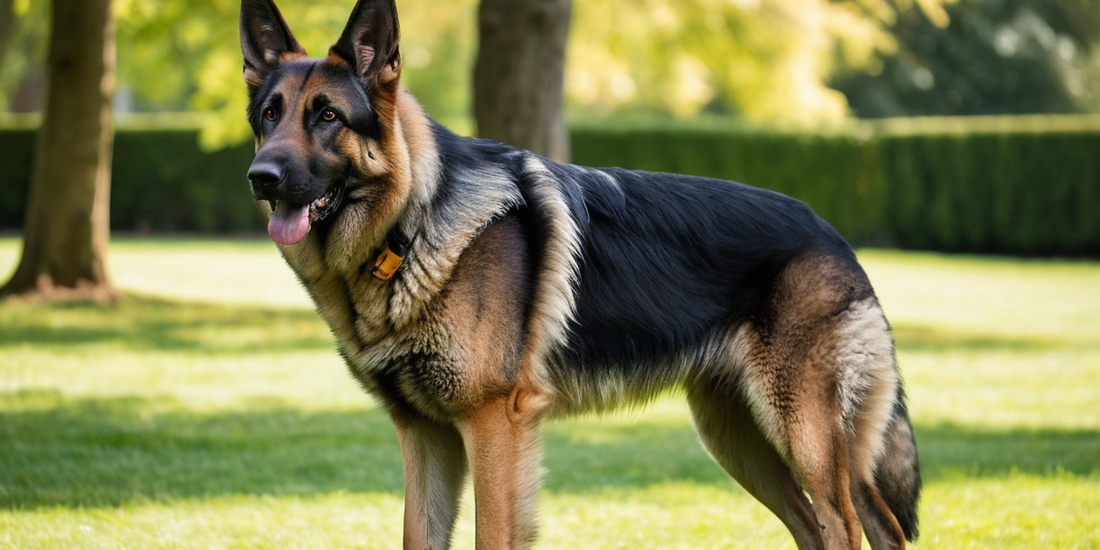
The diet of the German Shepherd is not a side issue, but the foundation for a long, active dog's life. As a powerful working and sport dog, he needs food that meets his energy needs, protects his joints, and at the same time is gentle on an often sensitive stomach. If you want to know how to feed your German Shepherd appropriately and according to his needs, you will find all the important answers here, from the right protein source to robust chew snacks that can withstand his strong chewing instinct.
The German Shepherd breed profile: nutritional needs
The German Shepherd is one of the most versatile working dog breeds of all. Whether in search and rescue, protection dog sport, or as an active family companion, he is muscular, has great stamina, and needs regular exercise to stay physically and mentally balanced. This activity level has a direct effect on his nutrient requirements.
An active German Shepherd burns noticeably more calories than a calm apartment dog. He needs high quality protein for muscle development, healthy fats as an energy source, and a well dosed supply of minerals for bones and joints. Since the German Shepherd is one of the large breeds, body weight also plays an important role: excess weight puts additional strain on joints and spine and should be avoided from the start through an appropriately sized food portion.
The quality of the ingredients is also important. The higher the quality of the food, the better the body can actually make use of the nutrients it contains. Cheap fillers such as grain or low quality meat by-products provide little benefit and can even trigger discomfort in sensitive German Shepherds.
Sensitive stomach and allergies: single source feeding
Hardly any large breed is as well known for a sensitive stomach as the German Shepherd. Many owners report soft stools, flatulence, itching, or ear infections, which are often linked to a food intolerance. The reason often lies in too wide a range of different protein sources and additives in the food, which can overtax the immune system.
This is exactly where the principle of single source feeding comes in. A monoprotein food contains only a single animal protein source and completely avoids grain and unnecessary additives. This significantly reduces the number of possible allergy triggers and makes it easier for your German Shepherd to digest every meal well.
Elimination diet for the German Shepherd
If you suspect that your German Shepherd suffers from a food allergy or intolerance, a controlled elimination diet is the most reliable way to find out. During this, you feed exclusively a single protein source that has not been used before, for a defined period, often combined with just a few other ingredients. This allows you to find out step by step exactly what your dog is reacting to, without other influences distorting the result.
This is exactly why buffalo is such a good protein source for this phase: it is one of the rare types of meat that has so far barely appeared in most dogs' bowls. This makes the risk of an already existing sensitization very low. For dogs with proven sensitivities, we offer specially formulated wet food for allergy sufferers, which is completely grain free and made from a single protein source.
The right food for the German Shepherd
When choosing food for the German Shepherd, you should pay attention to three basic principles: single source, grain free, and with a high, high quality meat content. Single source recipes with just one protein source are not only sensible for allergy sufferers, but are generally easier to digest and gentler on your dog's digestive tract.
Grain provides comparatively little benefit to dogs and can promote flatulence or skin problems in sensitive animals. A grain free recipe instead relies on easily digestible carbohydrate sources and focuses on what a dog naturally needs: real meat. Also make sure the food contains no artificial preservatives, colorings, or flavorings. Such additives provide no nutritional benefit but can place additional strain on sensitive German Shepherds.
Whether you choose wet or dry food depends on your dog's preferences and your everyday life. Our dry food is likewise grain free and single source, and is well suited to active German Shepherds with high energy needs. If you are unsure which recipe best suits your dog, our food finder will help you find the right recommendation in just a few steps.
Robust chew snacks for strong chewers
The German Shepherd chews with impressive force. Soft or low quality chew items are reduced to pieces in no time with him and can even pose a choking risk. Strong chewers therefore need snacks that can withstand this force while still being easy to digest.
This is where buffalo comes into play again. Our natural, air dried buffalo chew snacks consist of a single ingredient and are therefore ideal for German Shepherds prone to allergies. Especially popular are:
- Buffalo strossen, long fibered and very resilient, perfect for extended chewing sessions.
- Buffalo skin in various forms such as natural, rolled, or mega braid, robust enough for a German Shepherd's powerful jaws.
- Buffalo tendons, thinner and somewhat easier to chew, yet just as natural and free of additives.
All our natural chew snacks are gently air dried and produced without chemical additives. This not only protects your dog's stomach but also preserves as many natural nutrients as possible. To quickly find the right item for your German Shepherd and his individual chewing strength, it's worth taking a look at our chew item finder.
Joints and large breeds: what to watch out for
As a large, heavy dog, the German Shepherd carries a lot of weight on his joints, especially on the hips and spine. Due to his breed, he also tends toward conditions such as hip dysplasia, which is why a joint friendly diet makes sense from puppyhood on.
An optimal body weight is by far the most important factor here. Every extra kilo noticeably increases the strain on the joints. Make sure the amount of food is adjusted to his activity level and avoid too many calorie rich extra treats between meals. High quality chew snacks such as our buffalo products are a good alternative here, since they are low in calories yet keep him occupied for a long time.
Feeding sufficient high quality protein also supports the maintenance of muscle mass, which in turn stabilizes and relieves the joints. A balanced, single source recipe without unnecessary fillers provides exactly the nutrients your German Shepherd needs for strong muscles and resilient joints.
The German Shepherd puppy: nutrition from the very start
For a German Shepherd puppy, nutrition in the first months of life largely determines his later health. Growth that is too fast due to overly caloric food can increase the risk of joint problems, which is why growth should proceed slowly and in a controlled manner rather than as quickly as possible.
Choose a food for your puppy that is specifically formulated for large, growing breeds with a balanced calcium to phosphorus ratio. Here too, single source, grain free recipes are a gentle choice for a young dog's still sensitive digestive tract. Always introduce new types of food and chew snacks slowly and in small amounts, so you can recognize early on whether your puppy tolerates a particular ingredient well or less well.
When it comes to chewing, puppies should also start with gentler chew items until the permanent teeth have fully come through. After that, you can gradually move on to more robust chew snacks such as buffalo skin or buffalo strossen.
Frequently asked questions about German Shepherd nutrition
How often should I feed my German Shepherd?
Adult German Shepherds generally do well with two meals a day. This is easier on the stomach than one large portion and helps prevent flatulence. Puppies, on the other hand, need several smaller meals spread throughout the day.
How can I tell if my German Shepherd has a food allergy?
Typical signs are recurring itching, skin redness, ear infections, or soft stools with no obvious trigger. If this suspicion is confirmed, a structured elimination diet with a single, new protein source is the safest way to find out.
Is buffalo meat easy for German Shepherds to digest?
Yes, buffalo is considered a particularly gentle and rarely used protein source. Dogs with sensitive stomachs or existing intolerances in particular often respond well to it, since their immune system has had no prior contact with it.
Which chew snacks are suitable for a young, strong German Shepherd?
For adult German Shepherds with strong chewing habits, robust, air dried items such as buffalo strossen or buffalo skin are especially suitable. They are natural, long fibered, and withstand the breed's chewing strength without placing additional strain on the stomach.
Character & who the German Shepherd suits
In short, the German Shepherd is best suited to: active, experienced owners who want a working/watch dog.
- Size: large
- Energy level: very active
- With children: very good with children
- Apartment: rather not suitable for apartments
- For beginners: with some experience
- Coat care: moderate grooming effort
- Trainability: very eager to learn
- Alertness: strong watchdog instincts
Not sure whether this breed fits your life? Find out with our breed finder "Which dog breed suits me?".
Also useful: Which chew item suits my dog?





