
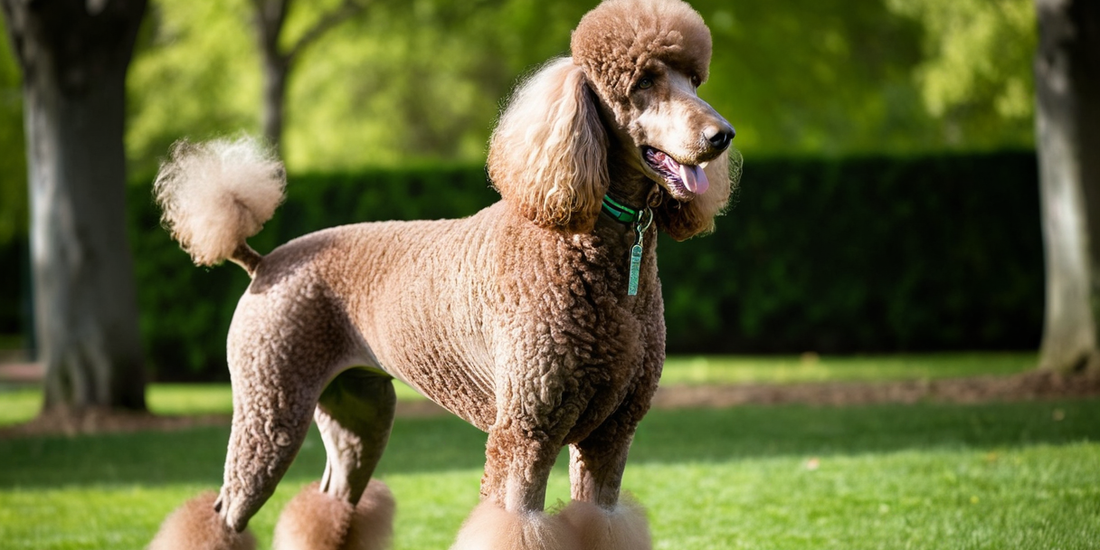
Poodle nutrition is not a minor matter, but the foundation for a long, healthy dog's life. Hardly any breed is as clever, playful and at the same time as sensitive in terms of stomach and skin as the Poodle. Whether Toy, Miniature, Small or Standard: anyone who gives their Poodle the right food lays the foundation for a shiny coat, stable digestion and plenty of energy for training and play. In this guide we show you what really matters for your Poodle's diet and which snacks suit his character.
The Poodle in profile: intelligent, active, sensitive
The Poodle is rightly considered one of the cleverest dogs of all. He learns quickly, thinks along and wants to be kept occupied, mentally just as much as physically. This activity and alertness use up energy, which is why a Poodle needs food that reliably supplies his muscles and nervous system. At the same time, the breed has a sensitive side: many Poodles react to low-quality ingredients, grain or unsuitable protein sources with gastrointestinal problems or skin irritation. His characteristic curly coat also needs targeted nutrients to stay dense, shiny and supple. In short: the Poodle is a dog that deserves quality rather than compromise when it comes to feeding.
The right food for your Poodle
To keep your Poodle fit, alert and thoroughly healthy, his food should rest on three pillars: high-quality protein, avoidance of grain and a portion adapted to his size.
Protein of the best quality
As an active dog, the Poodle needs sufficient, but above all high-quality, protein. It provides the building blocks for muscles, coat and immune system. Food with clearly declared, single-protein meat varieties is clearly advantageous here, because you know exactly what your dog is getting and can respond specifically to intolerances. In our dry food you'll find single-protein recipes tailored precisely to this need.
Feeding grain-free
Grain is a common trigger of digestive problems and itching for many Poodles. A grain-free food relieves the sensitive stomach and reduces the risk of unnecessary irritants in the bowl. Instead of empty fillers, good recipes contain more of what the dog really needs: high-quality meat, natural nutrients and easily digestible ingredients.
The right portion depending on size
The Poodle is not a single size, but ranges from the dainty Toy Poodle through the Miniature and Small Poodle to the sturdy Standard Poodle. Energy requirements vary accordingly. A Toy Poodle needs considerably smaller portions than a Standard Poodle, but often with a somewhat higher energy density, as small dogs have a faster metabolism. Our food finder helps you find the right amount of food and recipe for your Poodle's individual size and activity.
Sensitive skin & allergies: feed single-protein
Hardly any breed is as well known for sensitive skin as the Poodle. Itching, red patches, recurring ear infections or constant scratching can be signs of a food intolerance. The key to improvement often lies in single-protein feeding: a food with only one single, clearly defined protein source makes it much easier to find out which ingredient your Poodle actually tolerates.
If you suspect an allergy, a structured elimination diet is the most sensible approach. In this, you feed exclusively a new, previously untested protein source over a set period and observe how your dog's skin and digestion change. This is exactly where rabbit comes in: as a novel protein it is new to most Poodles and is rarely recognised as an allergen, making it a particularly suitable choice for Poodle allergies. Our wet food for allergy sufferers is specially developed for dogs with sensitive stomachs and skin, and each variety consists of a single, single-protein source without unnecessary additives.
Training treats for a clever mind
The Poodle wants to be challenged, and with his head. Whether basic obedience, tricks or dog sport: motivation during training requires small, high-quality rewards that are eaten quickly yet still packed with nutritional value. This is exactly where the importance of Poodle training treats shows, being lean, easy to portion and free of unnecessary additives.
Our buffalo lung is ideally suited: lean, easily digestible and divisible into small pieces, making it perfect for many short training sessions in a row without throwing your Poodle's daily calorie intake out of balance. This way, training success stays high and his figure stays slim. You'll find further natural rewards for in between in our selection of treats.
Coat & omega-3
The Poodle's curly, dense coat is his trademark, but also needs special care from within. For the curls to stay shiny, supple and resilient, omega-3 fatty acids are a crucial building block of the diet. They support not only coat growth but also have a positive effect on the skin barrier, which is doubly important for Poodles prone to irritation.
Fish is one of the best natural sources of these valuable fatty acids. Our fish sticks and dried sprats provide exactly the omega-3 supply needed for a shiny coat and healthy skin, entirely without artificial additives. You'll find an overview of our selection among the fish chews.
Suitable chews for the Poodle
Chewing keeps the Poodle sensibly occupied, reduces stress and cares for his teeth on the side. When choosing the right Poodle chews, it's worth looking at origin and ingredients list: air-dried, single-protein snacks without additives are the best choice for the sensitive Poodle stomach.
- Buffalo lung: lean and protein-rich, also ideal as a training booster
- Fish sticks and dried sprats: rich in omega-3 for coat and skin
- Rabbit ears: novel protein, particularly well tolerated in cases of sensitivity or suspected allergy
All our chews are single-protein and air-dried, entirely without artificial additives. You'll find the full selection in our natural chews category.
The Poodle puppy
The same applies to the Poodle puppy: growth needs high-quality nutrients, but in the right dose. Smaller variants in particular, such as the Toy and Miniature Poodle, grow quickly and should not be overfed, while larger Poodles need more energy for their growth. Make sure from the start to use grain-free, single-protein food, so that the stomach and skin never get used to low-quality ingredients in the first place. First training treats should be small, lean and easily digestible, such as thin strips of buffalo lung, so the puppy learns early without overtaxing his sensitive stomach.
Frequently asked questions about Poodle nutrition
How often should I feed my Poodle?
Adult Poodles generally manage well with two meals a day. Puppies and very small variants such as the Toy Poodle, on the other hand, benefit from several smaller portions spread across the day to keep blood sugar stable.
How do I recognise a food allergy in my Poodle?
Typical signs are recurring itching, red or inflamed skin patches, frequent ear infections, and soft stools or vomiting. If symptoms persist, a structured elimination diet with a novel protein such as rabbit is worthwhile.
Does my Toy Poodle need less food than a Standard Poodle?
Yes, significantly. A Toy Poodle has a much lower overall energy requirement, but often a faster metabolism, which is why portion size should always be individually adjusted to weight, size and activity level.
Are chews suitable for Poodles with a sensitive stomach?
Generally yes, as long as they are single-protein, air-dried snacks without additives. Rabbit ears as a novel protein are a particularly well-tolerated choice here for sensitive Poodles.
Character & who the Poodle suits
In short, the Poodle suits best: allergy-prone, active families; very eager to learn.
- Size: medium
- Energy level: medium
- With children: very good with children
- Flat living: suitable for flats
- For beginners: suitable for beginners
- Coat care: demanding grooming
- Trainability: very eager to learn
- Watchfulness: not a pronounced guard dog
Not sure whether this breed suits your life? Find out with our breed finder "Which dog breed suits me?"
Also worth reading: Natural treats for dogs





