
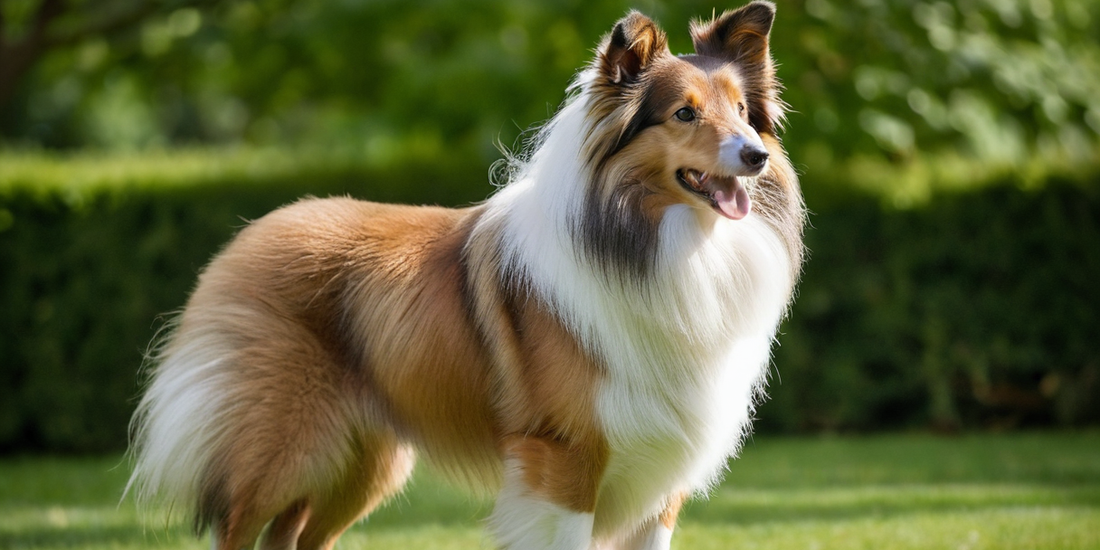
The Shetland Sheepdog, affectionately known as the Sheltie, is a small whirlwind with the heart of a big herding dog. Alert, clever and with a deep need to please, he's one of the most eager-to-learn breeds of all. These very traits make him so special, but they also place particular demands on his diet. A Sheltie needs food that supports his active daily life, maintains his magnificent coat and doesn't aggravate his sensitive skin. In this guide, we show you what really matters for Shetland Sheepdog nutrition and how to get everything right with single-protein, grain-free food and natural chews.
Profile: the clever mini-Collie
The Sheltie comes from the Shetland Islands off the Scottish coast, where he once herded sheep and guarded farms. Visually, he closely resembles a Collie in miniature, which is why he's often popularly called the "mini-Collie". With a shoulder height of around 33 to 41 centimetres and a weight of roughly 6 to 12 kilograms, he counts among the small to medium-sized breeds, but is full of energy and willingness to work.
Intelligence tests regularly rank the Sheltie among the cleverest dog breeds in the world. He often learns new commands after just a few repetitions and loves dog sport, agility and obedience. This mental alertness means a Sheltie wants to be challenged not only physically but also mentally, and this is exactly where the right diet plays a supporting role, as a balanced, well-nourished dog learns more easily and concentrates better.
Skin & allergies: feeding single-protein
Like many Collie relatives, the Sheltie also tends to have sensitive skin and quite often reacts to certain food ingredients with itching, redness, ear infections or recurring diarrhoea. A food intolerance or allergy is often behind this, frequently triggered by certain animal proteins, grain or additives.
The most reliable method for finding the culprit is an elimination diet: over several weeks, the dog is fed exclusively with a single, previously unknown protein source, single-protein and with no further additives. This allows you to find out step by step which ingredient is causing the symptoms. You'll find a detailed guide on our elimination diet page. It's important to stay consistent and genuinely keep an eye on every secondary source, including snacks and chews. Special wet food for allergy sufferers is also suitable for sensitive Shelties, relying on just a few clearly declared ingredients.
The right food: protein and grain-free
A Sheltie is naturally an active herding dog, so his body needs enough high-quality animal protein for muscles, coat and energy. At the same time, the food should be easily digestible and shouldn't put additional strain on his sensitive skin. Grain-free food is therefore a sensible choice for many Shelties, as grain is among the most common triggers of intolerances and often also fills the dog up unnecessarily without providing real nutritional value.
Look for food with a clearly declared protein content from a single, named meat source, without artificial flavours, colourings or preservatives. Single-protein recipes also make it easier for you to switch quickly to another protein source if needed, should your Sheltie react sensitively after all. Our dry food is put together according to exactly this principle. If you're unsure which recipe best suits your Sheltie, our food finder can help you make the right choice.
Training treats for the clever herding dog
Hardly any breed is as mad about mental work as the Sheltie. Whether it's an agility course, trick training or ordinary everyday training, his alert mind wants to be kept busy, and that requires the right reward. Training treats should be small, quickly eaten and easily digestible, so the training stays in flow and your Sheltie isn't pulled out of concentration by lengthy chewing.
At the same time, the more you train, the more rewards you automatically give, which is why the quality of the treats is crucial. Calorie-dense, heavily processed snacks quickly add up to a real calorie bomb with frequent training. Instead, rely on natural, single-protein treats without unnecessary additives; they deliver plenty of flavour with a manageable calorie content, making them ideal for long, motivating training sessions.
Coat & omega-3: shine from within
The Sheltie's long double coat is one of his trademarks, but it also needs corresponding care and nutrient supply. Omega-3 fatty acids play a central role for a healthy, glossy coat and resilient skin. They support the skin barrier from within, can ease itching, and help the coat become less prone to matting or looking dry.
A balanced, high-quality diet with natural fat sources is therefore not a luxury, but an important building block of preventive health care, especially for Shelties with sensitive skin. Combined with regular brushing and a single-protein, well-tolerated food base, the Sheltie's magnificent coat can be kept healthy in the long term.
Suitable chews for the Sheltie
Chewing serves the Sheltie not only for dental care but also for stress relief after an eventful training day. Since many Shelties tend towards food allergies, it's worth looking for single-protein, air-dried products without additives when it comes to chews too. Particularly suitable are lean, easily digestible chews with novel proteins the dog hasn't encountered before:
- Horse liver, in moderation as a particularly nutrient-rich, single-protein snack
- Venison skin, a lean, long-lasting chewing treat for persistent chewers
- Beef liver, also in moderation, as a protein-rich reward in between
- Goat lung, lean, easily digestible and ideal for sensitive stomachs
All these chews are available single-protein and grain-free in our chews category. If you're unsure which chew best suits your Sheltie and his individual needs, take a look at our chew finder, it helps you find the right product for your dog's size, chewing strength and tolerance.
Weight & active everyday life
Shelties are naturally fond of exercise and rarely prone to excess weight, as long as they get enough exercise and activity. Even so, it's worth regularly checking your dog's ribs and waist, especially if a lot of training is done with treats. The ribs should be easy to feel without visibly protruding, and a clear waist should be visible when viewed from above.
Adjust the amount of food to your Sheltie's actual activity level and factor training treats into the daily ration. An active herding dog who runs, jumps and practises commands daily has different energy needs than a calmer family dog, so it's worth checking the amount of food occasionally and adjusting it as needed.
Frequently asked questions about Shetland Sheepdog nutrition
How often should I feed my Sheltie?
For adult Shelties, two meals a day have proven effective, as they put less strain on the digestive tract than one large portion. Puppies and very active dogs often benefit from three smaller meals to keep blood sugar levels stable and support concentration during training.
What is the MDR1 gene defect in Shelties all about?
The MDR1 gene defect occurs more frequently in several Collie-type breeds, including the Sheltie. However, it affects the tolerance of certain medications, not food. As a precaution, have your Sheltie tested for this gene defect by your vet, so that the right active ingredients can be chosen should the need arise.
How do I recognise a food allergy in my Sheltie?
Typical signs are recurring itching, reddened skin, chronic ear infections or irregular bowel movements that can't be traced to external causes such as fleas. A single-protein elimination diet is the most reliable way to get to the bottom of the trigger.
Are grain-free chews suitable for every Sheltie?
Grain-free, single-protein chews are generally well tolerated and suitable for most Shelties, especially if a sensitivity is already known. Even so, always introduce new snacks one at a time and watch how your dog reacts.
With a well-thought-out, single-protein diet, you give your Sheltie exactly what he needs: plenty of energy for training and herding games, a healthy, glossy coat, and skin that doesn't constantly trouble him. This way, the clever mini-Collie stays thoroughly balanced and healthy in everyday life too.
Character & who the Shetland Sheepdog suits
In short, the Shetland Sheepdog is best suited to: active families, a very eager-to-learn mini-Collie.
- Size: medium
- Energy level: active
- With children: very good with children
- Flat living: fine with enough exercise
- For beginners: with a little experience
- Coat care: demanding grooming effort
- Trainability: very eager to learn
- Alertness: watchful
Not sure whether this breed suits your life? Find out with our breed finder "Which dog breed suits me?"
Pairs well with: Natural chews





