
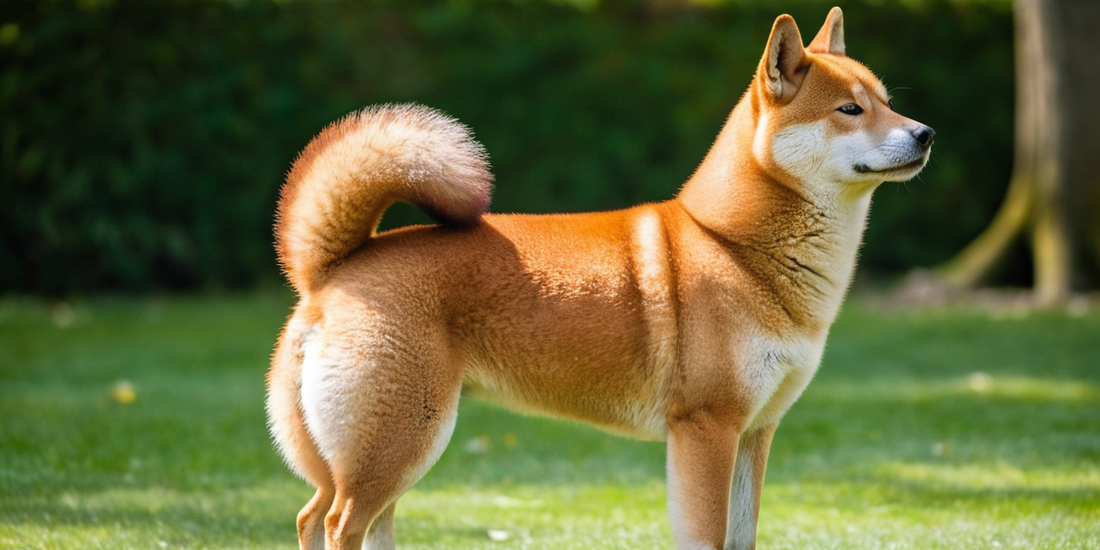
Shiba Inu nutrition is above all about one thing: paying close attention. This small Japanese spitz breed with its fox-like face and strong-willed character makes higher demands on its food than many owners initially expect. It is fussy, reacts sensitively to lower-quality ingredients and tends towards skin and food intolerances. Anyone who understands these particularities and chooses food for the Shiba Inu with care lays the foundation for a long, active dog's life alongside this truly individual character.
The Shiba Inu at a glance: independent and sensitive
The Shiba Inu is one of Japan's oldest and most ancestral dog breeds. It was once bred to hunt small game and birds in mountainous terrain and has retained its independent, almost cat-like character to this day. Anyone who has ever lived with a Shiba knows the feeling: he loves his family but decides for himself when and how to show affection.
With a shoulder height of around 35 to 43 centimetres and a weight of 8 to 12 kilograms, the Shiba is among the small to medium-sized breeds. Its build is compact and muscular, and its movements appear springy and supple. This athletic physique needs food that delivers real substance: high-quality protein for muscle and energy, without placing unnecessary strain on the body.
In terms of character, the Shiba is considered clean, intelligent and self-confident to the point of stubbornness. This very independence often shows up at the bowl too: the Shiba Inu does not simply eat everything just because it is placed in front of him. He tests, occasionally refuses a meal and has clear preferences. This combination of a discerning palate and sensitive digestion makes food selection a deliberate decision for this breed, not an afterthought.
Skin & allergies: feed single-protein
Hardly any breed is as well known for its tendency towards skin problems and food allergies as the Shiba Inu. Itching, redness, recurring ear infections or a dull, flaky coat are often a sign, in this breed, of an intolerance to certain food components. The usual culprits are protein sources that the dog has repeatedly consumed over a long period in various types of food, such as beef, chicken or grain protein.
This is exactly where the principle of single-protein feeding comes in. Instead of a food containing several types of meat, additives and changing recipes, the dog is given a single, clearly declared protein source. This drastically reduces the number of possible triggers and makes it possible, in the first place, to narrow down an intolerance cleanly.
The elimination diet for Shiba-typical complaints
If your Shiba Inu shows allergy symptoms, the safest route is a structured elimination diet. Over several weeks, you feed exclusively a new protein source that has not previously been fed, combined with a single carbohydrate source, completely grain-free and without additives. If the symptoms disappear during this time, you then reintroduce individual ingredients step by step and watch closely to see what your dog reacts to.
Important here: treats and chews count towards the diet too. However cleanly a food may be composed, if chews of unclear origin or with several ingredients are fed in between, this will distort the results. For the elimination diet, therefore, only single-protein products with a single, traceable ingredient are suitable. You will find detailed instructions on the correct procedure on our elimination diet page.
As a rare protein source that has so far been fed only rarely, buffalo is particularly well suited to sensitive Shibas. It is used far less often in standard feeding than beef or chicken, making it a genuine alternative if your dog has already reacted to the usual suspects.
The right food for the Shiba Inu
Whether your Shiba is already struggling with allergies or you want to feed preventively, the basic rules for good food for the Shiba Inu remain the same. The focus should be on a high proportion of high-quality, clearly named meat rather than vague collective terms such as "animal by-products". Grain has no place in the recipe, as it often places unnecessary strain on the body and can encourage digestive problems in sensitive dogs.
Single-protein feeding pays off not only in allergy cases. It generally gives you, as an owner, more control: you know exactly what is in the tin or the bag and can react in a targeted way whenever needed. Fans of dry food should take a look at our dry food range, while our wet food for allergy sufferers is recommended for sensitive digestion or a known tendency towards intolerances.
Not sure which food best suits your individual Shiba? Our food finder filters our entire range down to the products that match your dog's size, age and sensitivity, saving you the trouble of comparing individual ingredient lists.
The fussy eater: tips for the headstrong Shiba
Shiba Inu fussy at mealtimes? For many owners, this is not a surprise but everyday life. Unlike a Labrador or Golden Retriever, which rarely skip a meal, a Shiba may well leave a portion untouched if he simply is not in the mood. This lies in the nature of the breed and is usually no cause for concern, as long as your dog overall stays fit, active and at a healthy weight.
A few tried-and-tested approaches help when dealing with headstrong eating behaviour:
- Stick to fixed feeding times and remove the bowl again after around 15 to 20 minutes, rather than leaving it out all day.
- Do not switch varieties immediately at every refusal. Changing too often can actually reinforce fussy behaviour.
- Focus on good quality and sufficient aroma. A high-quality, single-protein meat food usually wins Shibas over more readily than heavily processed mixed products.
- Avoid stress and distraction at mealtimes, as the Shiba prefers to eat calmly and without hustle at the bowl.
It is important to distinguish genuine fussiness from a health problem. If your Shiba consistently refuses food over several days, visibly loses weight, or additional symptoms such as vomiting or diarrhoea appear, this calls for veterinary attention.
Suitable chews for sensitive Shibas
Chewing is as much a part of everyday life for the Shiba Inu as eating itself. It occupies the mind, relieves stress and supports dental care along the way. For a breed prone to skin and food allergies, however, Shiba Inu chews should meet the same strict standards as the main food: single-protein, grain-free, air-dried and free from artificial additives.
Buffalo is a good option here too, as it is rarely fed and therefore keeps the risk of a reaction low. The following are particularly well suited to the compact but powerful jaw of a Shiba:
- Buffalo trachea as a natural, long-lasting chewing treat with a firm texture.
- Buffalo sinews as an enduring chew that keeps him occupied for a long time without overloading the stomach.
- Buffalo skin, plain or rolled, as a particularly digestible and easily tolerated option for sensitive dogs.
You will find all three varieties, single-protein, in our buffalo chews category, with further natural options beyond buffalo in our natural chews. If you are unsure which chew suits your Shiba's size, age and chewing strength, our chew finder can help you choose.
A tip from practice: always introduce new chews one at a time and watch your dog for a few days. This way, you quickly spot whether a new variety is well tolerated before it becomes a fixed part of the repertoire.
Weight & an active everyday life
The Shiba Inu is an active, tireless dog that needs physical and mental stimulation to stay balanced. Its compact, muscular build forgives excess weight only to a limited degree: even a few extra kilograms place strain on the joints and back and noticeably restrict mobility.
Use the feeding recommendations on the relevant product as a guide, but always adjust them individually to your dog's activity level, age and metabolism. A Shiba who enjoys long daily walks, canine sport or free running needs noticeably more energy than a calmer member of the breed. Regularly feeling along the ribs and looking down at the waist from above give you a good indication of whether the weight is still right.
Chews also count towards the daily calorie balance. For an active Shiba with a tendency towards excess weight, factor them into the overall food amount rather than treating them as a pure extra.
The Shiba puppy: the foundation for a healthy dog's life
With a Shiba puppy, how well he will tolerate food later on is often decided early. From the start, choose a high-quality, single-protein puppy food with a clearly defined protein source, and avoid frequent changes of variety in the first months of life. This gives the sensitive digestive system time to stabilise and helps prevent the development of food intolerances.
As many puppies of this breed already show their headstrong character at a young age, it is worth establishing fixed feeding rituals from the outset: set times, a calm environment, no extra helpings if food is refused. This lays the groundwork early on for relaxed eating behaviour in adulthood.
Chews should be introduced to puppies gently and in small, soft sizes, always suited to the still-developing teeth. Buffalo skin is often better suited here than very firm trachea, as it is easier to chew and does not overtax the young jaw.
Frequently asked questions about Shiba Inu nutrition
Which food is best tolerated by a Shiba Inu with allergies?
A single-protein, grain-free food with a single, clearly declared protein source is best suited. If your dog already reacts to beef or chicken, a rarer source such as buffalo is often a well-tolerated alternative.
How do I know if my Shiba Inu has a food allergy?
Typical signs include recurring itching, red or flaky skin, ear infections and digestive problems. Confirmation and precise narrowing down usually require a consistently carried out elimination diet.
Why does my Shiba Inu sometimes simply not eat?
The Shiba is typically considered independent and fussy for its breed. As long as your dog stays fit, active and at the right weight, occasionally skipping a meal is usually nothing to worry about. If the refusal continues over several days, a vet should take a look.
Are buffalo chews suitable for sensitive Shibas?
Yes. Buffalo is rarely fed and is considered a rare, well-tolerated protein source. Single-protein products such as buffalo trachea, buffalo sinews or buffalo skin are a natural and usually well-tolerated choice for chewing enthusiasts with sensitive digestion.
Character & who the Shiba Inu suits
In short, the Shiba Inu is best suited to: experienced owners who value independence.
- Size: medium
- Energy level: medium
- With children: good with children
- Flat living: fine with enough exercise
- For beginners: better suited to experienced owners
- Coat care: moderate grooming effort
- Trainability: moderately eager to learn
- Watchfulness: watchful
Not sure whether this breed suits your life? Find out with our breed finder "Which dog breed suits me?"
- Tosa Inu
- Irish Setter
- Pyrenean Mountain Dog
- Airedale Terrier
- White Swiss Shepherd Dog
- Cavalier King Charles Spaniel
Also relevant: Which chew is right for my dog?





