
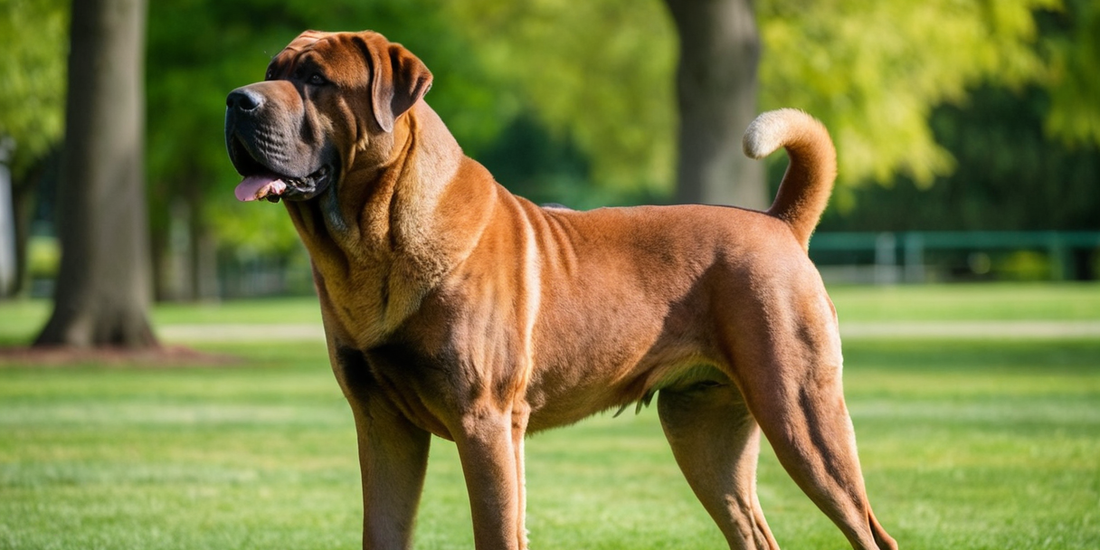
The Tosa Inu is a dog who commands respect without being loud. He stands calmly in the room, observes and comes across as composed like hardly any other breed. This calmness, however, easily disguises just how much power, muscle mass and substance this molosser carries. And it's precisely this combination of a calm temperament and a massive build that poses a particular challenge for Tosa Inu nutrition: the dog needs nutrients for his heavy musculature, yet at the same time a controlled energy intake, so that this imposing molosser doesn't turn into an overweight four-legged friend with strained joints. In this guide, we show you what matters when it comes to food and chews for the Tosa Inu, from protein supply and joint protection to the sturdy chews that stand up to his powerful bite.
🛒 Straight to the shop: dry food for adult dogs, joint-friendly, grain-free, for large breeds.
Profile: the Japanese molosser with a calm nature
The Tosa Inu originates from Japan, where he was originally bred for dog fighting. This history has given rise to a breed image that is often misunderstood. Anyone who knows a well-socialised Tosa Inu knows that he is, first and foremost, a dignified, calm and loyal companion. He rarely seeks confrontation, is loyal to his family and usually appears composed, almost deliberate in his movements.
Physically, the Tosa Inu is a true molosser: large, heavy, muscular, with a deep chest and a powerful bone structure. Males often reach a weight well over 40 kilograms, and in some lines even more than 60 kilograms. This build means that nutrition cannot follow a one-size-fits-all approach, but must take into account the typical challenges of large, heavy breeds: a high nutrient requirement for the musculature, while at the same time being careful with the energy amount so that excess weight doesn't strain the joints and heart.
The right food for the Tosa Inu
A dog with this much muscle mass needs high-quality, easily usable protein. Meat should therefore form the basis of Tosa Inu nutrition, ideally from a single, clearly declared source. Single-protein food offers two advantages for this breed: you know exactly what ends up in the bowl, and in the case of a food intolerance, the cause can be narrowed down quickly, as there are no hidden mixtures of several protein sources involved.
Grain has little place in a Tosa Inu's bowl. Many large breeds react sensitively to grain content in food, with symptoms such as soft stools, flatulence or skin problems. Grain-free food is also generally more nutrient-dense, meaning your dog gets more valuable ingredients and fewer fillers per portion. Also look for a food free of artificial additives, flavourings and flavour enhancers. A cleanly declared food without unnecessary ingredients eases the burden on digestion and the immune system, and is the better choice especially for a breed with sensitive digestion like the Tosa Inu.
When choosing between dry and wet food, your dog's individual needs play the main role. Our dry food provides concentrated energy with long-lasting satiety, well suited to the everyday life of large, active dogs. Our wet food scores with a high meat content and additional fluid intake, which can be particularly useful on hot days or for dogs with a lower sense of thirst. Many Tosa owners combine both. If you're unsure which food suits your individual dog, our food finder can help you choose.
Weight and joints: keeping his quiet strength in check
Precisely because the Tosa Inu is so calm and deliberate, he tends towards being overweight more readily than lively, sporty breeds. A molosser who would rather doze than romp burns fewer calories, while his build is fundamentally geared towards a lot of muscle mass. This combination makes controlled energy intake a central component of Tosa Inu nutrition. Too much food and too little exercise lead to weight gain in this breed relatively quickly, and every extra kilo places additional strain on joints and a heart that are already under considerable load.
For Tosa Inu joints, prevention is therefore better than correction later. An appropriate body weight is the most effective joint protection there is, more important than any supplement. Regularly check whether you can still easily feel your dog's ribs without them being visibly prominent. It's better to split the daily ration across several small meals rather than one large portion, which not only eases digestion but also helps control the feeling of fullness more effectively. Moderate, regular exercise rather than sporadic bursts of effort further protects the joints of such a heavy dog.
Sturdy chews for a powerful bite
The Tosa Inu has one of the most powerful bites among dog breeds. What's chewed through within a short time by smaller dogs often poses no real challenge for a Tosa. Chews for this breed therefore need to be genuinely sturdy, otherwise they're used up within minutes or swallowed too quickly.
Particularly well suited are very firm, slow-to-work chews such as beef Achilles tendon, which keeps him occupied for a long time thanks to its tough structure while also mechanically cleaning the teeth. Buffalo tendons offer a similarly long chewing resistance thanks to their hard, sinewy texture and are especially popular with powerful chewers. Buffalo skin, for example as a jumbo plait, withstands even a Tosa for a long time thanks to its thickness and toughness, and is well suited to longer, relaxed chewing sessions in which your dog can indulge his calm side.
All of these chews are available single-protein, grain-free, air-dried and free from additives, just like the food. This keeps the diet consistently natural even when it comes to chewing. You'll find an overview of suitable products among our natural chews, with particularly sturdy buffalo options among the buffalo chews. If you're unsure which chew suits your Tosa Inu's chewing strength, our chew finder will support you in choosing.
Give every chew under supervision and make sure your dog sits or lies down calmly while chewing rather than wandering about. This reduces the risk of larger pieces being swallowed too quickly, which is especially important for such a powerful chewer.
The Tosa puppy: slow growth requires patience
As with all large breeds, the growth of a Tosa puppy is a long, sensitive process. It takes considerably more months than with small breeds for the dog to reach his final size and full weight. It is precisely during this phase that much is decided for the later health of the joints. Growth that is too rapid, caused by overly energy-rich food or too much protein and calcium, can negatively affect the development of bones and joints and increase the risk of later joint problems.
So choose a food specifically tailored to the controlled, slow development of large breeds, and stick to the recommended feeding amounts rather than feeding by feel. For puppies too, several small meals spread across the day are better than a few large portions. Excessive physical strain, such as long walks or jumps on hard ground, should be avoided in the first months of life so that bones and joints can develop undisturbed. Patience during this phase pays off later in the form of a stable, healthy musculoskeletal system.
Bloat and feeding routine
With his deep, broad chest, the Tosa Inu is among the breeds with an increased risk of bloat (gastric torsion). A fixed feeding routine helps to lower this risk: feed two to three smaller meals a day rather than one large portion, and let your dog settle after eating instead of exercising him or letting him romp straight away. You should also avoid hasty eating and large amounts of water immediately after a meal. These simple habits suit the Tosa Inu's calm nature well anyway and are easy to integrate into daily life.
Allergies and sensitive digestion
If your Tosa Inu shows recurring symptoms such as itchy skin, ear infections or irregular stools, a food intolerance could be behind it. Single-protein, grain-free food is already a good first step here, as it reduces the number of possible triggers. If the symptoms persist, a structured elimination diet can help narrow down the exact cause. This involves feeding a single, previously unfed protein source over a set period in order to observe reactions in a targeted way. You'll find detailed guidance on this on our page about the elimination diet.
Frequently asked questions about Tosa Inu nutrition
How much food does an adult Tosa Inu need per day?
This depends heavily on the individual dog's weight, age and activity level. The feeding recommendation on the packaging serves as a guide, adjusted to the individual drive to move. Regular weighing and feeling the ribs will reliably show you whether the amount is right.
Is grain-free food really necessary for the Tosa Inu?
Strictly necessary, not for every dog, but sensible. Grain-free food is usually more nutrient-dense and is better tolerated by many large breeds with sensitive digestion, which can help prevent flatulence and soft stools.
Which chew is suitable for a very strong chewer?
Beef Achilles tendon and buffalo tendons withstand a Tosa Inu's powerful bite for a particularly long time. Thicker buffalo skin, such as the jumbo plait, is also well suited to longer, relaxed chewing sessions.
From what age should a Tosa puppy be switched to adult food?
In large breeds, the growth phase lasts considerably longer than in small dogs. The switch should only happen once growth and weight development have visibly slowed down, and if in doubt, in consultation with the vet.
Character & who the Tosa Inu suits
In short, the Tosa Inu is best suited to: very experienced owners (subject to restrictions in places), a calm molosser.
- Size: very large (giant)
- Energy level: calm
- With children: suitable with children to a limited extent
- Flat living: not really suited to flat living
- For beginners: better suited to experienced owners
- Coat care: low maintenance
- Trainability: moderately keen to learn
- Watchfulness: a pronounced watchdog
Not sure whether this breed suits your life? Find out with our breed finder „Which dog breed suits me?“.
Frequently asked questions
Is the Tosa Inu a restricted breed?
In some German federal states the Tosa Inu is classed as a dangerous dog and may only be kept under certain conditions. Before getting one, be sure to check the law of your state of residence.
How much exercise does a Tosa Inu need?
He needs moderate but consistent exercise: calm, long walks and mental occupation. He's not a high-performance athlete, and overexertion harms his joints.
Is the Tosa Inu a family dog?
With his own family he is calm, affectionate and loyal. However, he needs experienced, confident leadership and is not a dog for beginners.
Which food suits a Tosa Inu?
As a large-growing breed he needs high-quality food with a protein and mineral balance adjusted for the joints. For a sensitive stomach, a grain-free single-protein food makes sense.
How big and heavy does a Tosa Inu get?
The Tosa Inu is a very large breed. Males often reach 60 to 80 kilograms, so he needs plenty of space and calm accordingly.
Hearty food for a large breed
Large dogs need high-quality protein and long-lasting chews. Our grain-free dry food and sturdy natural chews are made exactly for that.





