
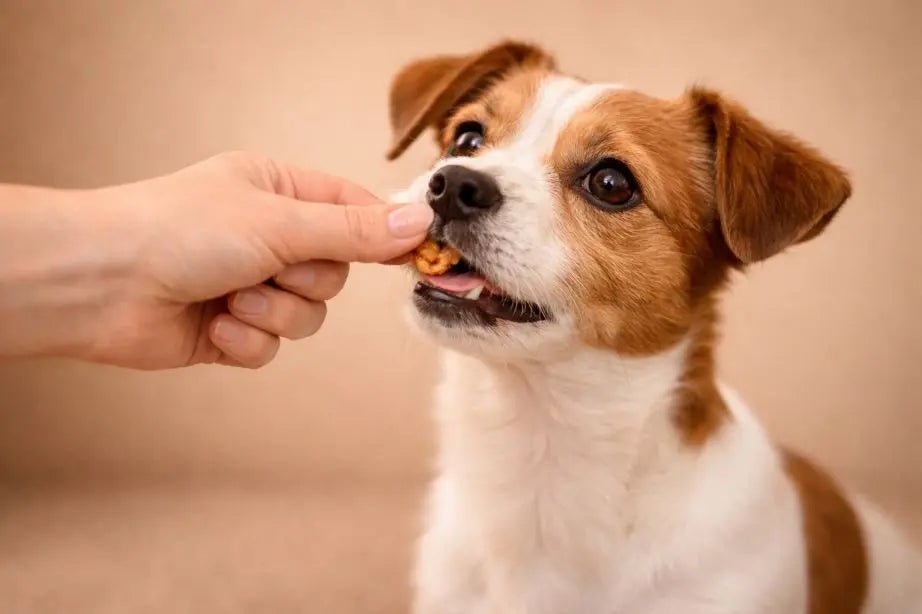
High-Quality Dog Treats: Natural Ingredients, Single-Protein, Grain-Free and Sensible Rewards for Everyday Life
Dog treats are a staple in many households. They help you with training, reward everyday good behaviour and can provide reassurance in new situations. At the same time, treats are part of your dog's daily diet. If you feed consciously, you therefore pay attention not only to acceptance, but also to ingredients, tolerability, calories and origin. This article from kauliebe.com looks at how to choose high-quality dog treats, how natural and transparent recipes give you confidence and how to incorporate rewards sensibly without overfeeding. You'll also find practical product ideas, including Nandoo dog treats, Lieblingslecker from Lillys Leckerwelt and the sliceable dog sausage from FleischWerk.
Why high-quality dog treats are an important part of conscious dog nutrition
When you feed your dog consciously, you don't just think about the main food. In many families, treats are a daily standard: for recall, for putting on the lead, at the vet's, during dog training or simply as a small gesture of appreciation. That's precisely why they also help determine tolerability, weight and wellbeing. If rewards play a role every day, they're not a side issue, but a building block of the overall ration.
In practice, this becomes clear quickly: if your dog gets lots of snacks, they take in extra calories. In small dogs, neutered animals or less active dogs, weight can creep up unnoticed. At the same time, unsuitable ingredients can put a strain on the digestive tract or make skin and ears more sensitive. Many owners think of the main food first when symptoms appear, but triggers often come from the treat drawer. Conscious feeding therefore means choosing treats deliberately and sticking to them consistently.
High-quality dog treats can also make training easier. Your dog gets a reward they reliably accept, and you can work with the same basis for weeks. This provides stability, especially for sensitive dogs. If a snack smells different every time, is very high in fat or the recipe changes frequently, the effect also becomes less predictable. Especially in training, where many repetitions are needed, consistent quality is a genuine advantage.
There's also the everyday effect. Rewards aren't just food, they're communication: you mark the right decisions, you provide reassurance in stressful situations and you can reinforce desired behaviour. If you reach for products that are clearly declared, easy to portion and well tolerated, rewarding becomes a tool that supports your dog rather than placing a strain on them. That's the essence of high-quality treats: they're practical, predictable and fit into a well thought out feeding concept.
Last but not least, it's about trust. You want to understand what's in the snack. Transparency, clear ingredient lists and traceable production standards help you make decisions with confidence. If you take this seriously, you'll have fewer surprises in everyday life, particularly with dogs that have sensitive digestion or a suspected allergy.
The importance of natural and transparent ingredients in dog treats
Natural and transparent ingredients mean one thing above all: you can see exactly what you're feeding. That sounds obvious, but it isn't. Many treats use collective terms, flavourings or very long ingredient lists. The more complex the composition, the harder it becomes to assess tolerability. Transparent labelling is therefore a key quality feature, especially if you feed consciously or need to take sensitive dogs into account.
The practical advantage of a clear recipe lies in controllability. If your dog reacts to certain ingredients, you can deliberately choose products that don't contain those components. This is considerably easier with single-protein or clearly reduced snacks. Transparency also helps during training, because you don't have to keep introducing new ingredients just to create variety. Variety can make sense, but it should be planned, not random.
Natural snacks are often associated with fewer additives. Many owners prefer treats without added sugar, without artificial colours and flavourings and without unnecessary fillers. This isn't automatically a guarantee of better tolerability, but it can reduce the likelihood of your dog reacting to a hard to pin down component. Especially with frequent use, reduced recipes are often a sensible basis.
Besides the ingredient list, processing also plays a role. Some treats are very greasy, very soft or sticky. This can make handling more difficult and increase the calorie balance with frequent use. Other products are dry, easy to portion and better suited to a jacket pocket or training bag. A high-quality treat therefore needs to be not just good, but also practical.
Transparency is especially important if you're working with a clear feeding concept, for example when a food reaction is suspected. Even small amounts of an unsuitable snack can distort your observations. If you want to stay consistent, you need snacks that fit the concept and are clearly declared. For many owners, this is the strongest reason to pay attention to natural and transparent ingredients.
Single-protein and grain-free treats, benefits for your dog's health
Single-protein treats contain only one animal protein source. This makes them particularly interesting for dogs that react sensitively, as well as for you if you want to structure feeding consciously. In practice, single-protein is above all a control tool: you reduce variables. The fewer different proteins fed in parallel, the easier it is to assess tolerability.
This isn't only relevant when an allergy is suspected. Dogs that tend to develop soft stools with frequent food changes also often benefit from a stable, manageable range of snacks. Many classic treats contain mixtures of different animal species, offal, egg or fish meal. This variety isn't inherently bad, but it makes it harder to narrow down problems. Single-protein creates clarity here.
Grain-free is another feature that can make sense for your dog. Most dogs tolerate grain without issue, but individual animals react sensitively to certain types of grain or to very starch-heavy recipes. Grain-free treats can help you reduce the ingredient list and avoid unnecessary components. It's important not to just look at the label. What matters is the composition, the calories and your dog's individual reaction.
A common misconception is that grain-free automatically means lighter or healthier. That isn't true across the board. Grain-free snacks can also be high in energy if they contain a lot of fat or if alternative carbohydrates are used in high amounts. The real advantage lies in the ability to deliberately exclude certain ingredients and keep feeding manageable.
For many households, the combination of single-protein and grain-free is a good standard, especially if your dog is sensitive or if you want to stick consistently to one protein source. This provides predictability in training and reduces the likelihood of treats becoming an unnoticed problem.
How to choose the right dog treats for your four-legged friend's individual needs
The right treats depend on the purpose and on your dog. A training snack needs to be small, quick to eat and well tolerated. A snack for quiet moments can be bigger and keep your dog occupied for longer. A dog with a sensitive stomach needs a much more limited selection than a dog that tolerates everything. That's why it's worth looking not for one perfect product, but for a sensible combination.
Start with three questions. First: what do you need the treat for? Second: which protein source suits your dog? Third: realistically, how many rewards do you give per day? These answers produce a selection that works in everyday life. A combination of a standard training snack and a particularly appealing snack for difficult situations is often a good idea.
Pay attention to your dog's life stage. Puppies benefit from softer morsels that don't strain the teeth. Senior dogs often need snacks that are easy to chew. For very active dogs, higher-energy rewards are easier to incorporate, while calmer dogs put on weight more quickly. For overweight dogs, portioning is more important than brand choice: small pieces, a clear daily amount and, where appropriate, part of the food ration used as a reward.
Also consider the situation. For walks in town or when meeting other dogs, small, highly motivating snacks that are quickly available are helpful. At home, a calm chewing reward ritual that isn't repeated constantly can work well. If your dog gulps food down quickly, avoid crumbly or oversized pieces and stick to shapes that are safe to handle.
In the end, what counts is a selection you can maintain consistently. The clearer your system, the more stable everyday life becomes, especially for sensitive dogs. If you manage treats consciously, they become a predictable tool rather than an uncontrolled source of calories.
The role of dog treats in training and rewards, healthy and motivating
Treats are so effective in training because they let you reinforce behaviour precisely. Your dog understands more quickly which behaviour pays off. What matters is timing, frequency and the right size. In most training sessions, a high reward frequency with very small pieces works best. This keeps motivation high without the calories getting out of hand.
For a healthy reward strategy, it's worth distinguishing between everyday rewards and motivational rewards. A standard treat is enough for simple exercises in a calm environment. In difficult situations, for example with distractions around, a particularly appealing snack can help keep your dog responsive. It's important to use these stronger rewards selectively, not permanently. This keeps their value intact.
Rewards don't just mean food. Many dogs also enjoy play or free running. Even so, treats are often the most practical tool in everyday life because they work quickly and quietly. Health here comes down to management: small portions, a clear daily amount and snacks your dog reliably tolerates. If your dog regularly gets soft stools after certain treats, they aren't a sensible training partner, however well they're accepted.
A good approach is to work with a reward pouch and a daily snack allowance. This way you keep track of the quantity. You can also use part of the main food as a training reward if your dog is motivated by it. This way, training sessions can be intensive without the calories increasing.
Nandoo, Lillys Leckerwelt and FleischWerk in focus: everyday rewards compared
Many owners want a selection of snacks that is both well tolerated and practical. In everyday life, three product approaches have proven their worth: classic training treats with a clear recipe, particularly flavourful favourite snacks for demanding situations and sliceable rewards that you can portion flexibly. This is exactly where the following brand ideas fit in well: Nandoo dog treats, Lieblingslecker from Lillys Leckerwelt and the sliceable dog sausage from FleischWerk.
Nandoo dog treats: a clear choice for conscious feeding
Nandoo stands for an everyday-friendly selection focused on transparency and recipes that are easy to integrate. What matters to you is that treats are reliable: consistent quality, clear labelling and options that can suit sensitive dogs. It's particularly practical if you can portion snacks well and they don't get overly greasy or crumble in your training bag. Nandoo can be a solid everyday basis here, especially if you deliberately narrow down your snack selection and stick to it consistently.
Lillys Leckerwelt Lieblingslecker: high acceptance as a motivational joker
Lieblingslecker from Lillys Leckerwelt is often chosen when your dog needs a particularly appealing reward, for example with a high level of stimulation or in training situations with strong distractions. These kinds of snacks make sense in everyday life if you use them selectively and don't turn them into a permanent reward. The principle is simple: a particularly high-value treat stays something special. This way you can increase motivation without increasing the quantity.
FleischWerk sliceable dog sausage: portion flexibly, ideal for training
Sliceable dog sausage is interesting for you because you can dose it very flexibly. You can cut small cubes that fit exactly to the training situation and control the amount precisely. If your dog finds dry treats less appealing, a sliceable sausage can significantly boost motivation. At the same time, the same rule applies here: keep an eye on calories and composition and adjust the daily ration accordingly. This approach is particularly practical if you train regularly and are looking for a consistent, easy to portion reward.
Which solution fits best depends on your dog. Many households do best with a combination: a reliable basis like Nandoo for everyday use, a targeted motivational snack like Lieblingslecker for demanding situations and a flexibly portionable option like the sliceable dog sausage for intensive training. What matters is that you manage the selection consciously, rather than constantly switching.
Tips for incorporating dog treats into everyday life without overfeeding
Overfeeding usually creeps in gradually. A single snack seems small, but a lot adds up over the course of a day: a few morsels on the walk, a few during training, an extra one when visitors come round. The most important step is a fixed system. Set a daily amount of treats and stick to it consistently. Whatever's in the tin, you may feed, and then that's it for the day.
For training, the rule is: small pieces are almost always better. If you use a sliceable dog sausage, cut very small cubes. If you use dry treats, choose mini formats or break larger pieces up. The smaller the portion, the more often you can reward without increasing calories. If your dog gains weight quickly, reduce the main food amount or use part of the main food as a training reward.
Also watch out for unconscious feeding. Treats shouldn't reward begging at the table or getting overexcited when visitors arrive. Instead, reward calm behaviour, for example when your dog stays on their blanket. This way, the snack isn't just a calorie, but a training signal that improves everyday life.
For sensitive dogs, a clear structure also helps: few products, a fixed protein source, no random extras. This stabilises digestion and makes reactions easier to trace. This way, rewarding stays a plus point without any side effects.
Common mistakes when choosing dog treats and how to avoid them
A classic mistake is buying on the principle of: as long as your dog eats it. Acceptance is important, but it isn't the only criterion. Check the ingredient list, the protein source and everyday suitability. If a snack regularly leads to soft stools, itching or strong excitement, it isn't suitable, however popular it is.
A second mistake is too much variety. Many different snacks fed in parallel make it hard to assess tolerability. Instead, rely on a few well suited products. For many dogs, a small selection is enough: a standard training treat, a motivational joker and optionally a portionable training sausage.
Size is also often underestimated. Large pieces quickly add up to a lot of calories. Break snacks up consistently. This change pays off immediately, especially with small dogs. Another mistake is failing to adjust the main food ration. If you train daily, the overall energy balance has to add up. Treats aren't an extra that sits outside the calculation.
When an allergy is suspected, it's often forgotten that treats can distort the outcome of a feeding strategy. If you want to test ingredients, you need consistent, clearly declared snacks that match the chosen protein source. Anything else prevents reliable observations.
Responsibility and animal welfare in the production of high-quality dog treats
Responsibility starts with transparency. If you can trace where raw materials come from and how they're processed, you can make a more informed decision. High-quality manufacturers often rely on clear labelling, defined raw materials and processes that preserve quality rather than masking it. This also applies to packaging and logistics. Less outer packaging, appropriately sized packs and storage that prevents spoilage are practical, everyday contributions.
Animal welfare is complex and can't be read off the treat alone. Even so, it helps to choose brands that communicate their standards transparently and use traceable quality controls. You can also exert influence through your buying behaviour: rather than giving lots of snacks in an uncontrolled way, use targeted, high-quality products and portion them appropriately. This reduces waste and encourages more conscious demand.
In practice, this means: if responsibility matters to you, prioritise clear information, short supply chains where identifiable, and products you can dose sensibly. This way, you combine animal welfare with everyday practicality.
Discover now: recommendations for healthy, tasty rewards for your dog
If you want to put your rewards on a stable system, start by choosing a reliable basis. A well-tolerated, clearly declared treat that you can use daily is the most important building block. In addition, a motivational snack is worth having for situations with strong distractions. Lieblingslecker from Lillys Leckerwelt, for example, can be a good choice here if you use it deliberately as a joker. For intensive training, where you give a lot of rewards, a flexibly portionable option such as the sliceable dog sausage from FleischWerk is practical, because you can adjust the piece size exactly.
Nandoo dog treats are suitable as a solid everyday basis if you value transparency, a clear selection and sensible integration into conscious dog nutrition. Combine this with a consistent daily ration, small portions and an adjustment of the main food where necessary. This way, treats stay motivating without putting a strain on weight or digestion.
Our tip from kauliebe.com: keep your snack selection manageable, introduce new products one at a time and watch how your dog reacts. If you put these basics into practice, you'll find rewards that taste good, motivate and fit into a well thought out feeding concept.
Matching products at kauliebe
You'll find high-quality single-protein rewards in our natural treats.


