
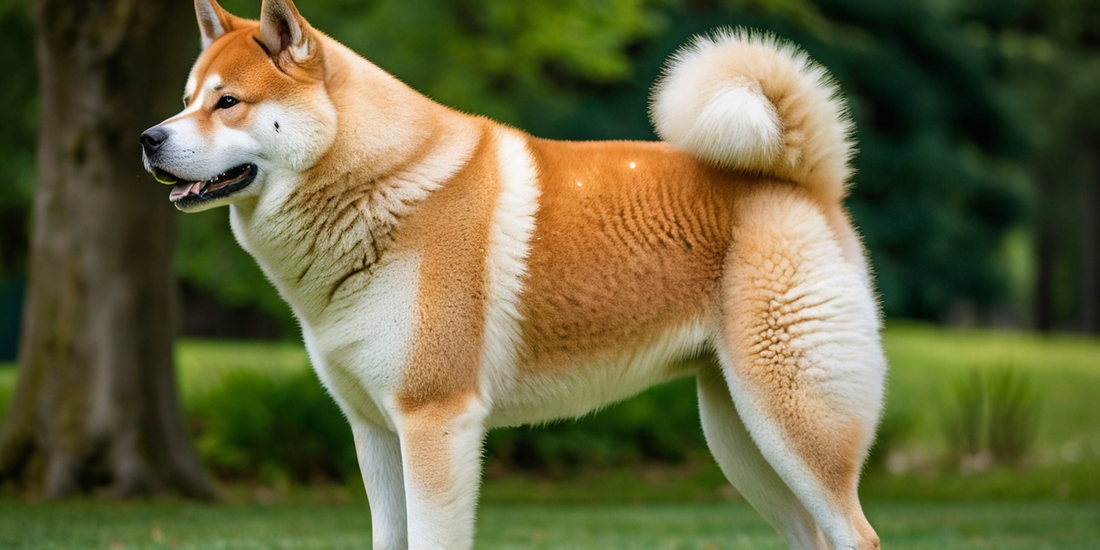
Akita Inu nutrition is about more than choosing the right bowl: it plays a key part in how well this proud, ancestral breed from Japan truly thrives. The Akita Inu has a reputation for being dignified, calm and deeply loyal, but it also brings a trait that surprises many owners: it tends to be more prone than average to skin and food intolerances. Anyone who wants to keep their Akita Inu healthy and balanced can hardly avoid conscious, single-protein feeding. In this guide, we show you what matters when it comes to food for the Akita Inu, how to recognise a possible Akita Inu allergy and which chews are suitable for your dog's sensitive skin.
The Akita Inu at a glance: dignified and sensitive
The Akita Inu originates from the mountain regions of northern Japan, where it was originally used to hunt large game. This heritage explains a great deal: a powerful bone structure, a dense double coat and a calm, almost dignified presence still define the breed today. As a large breed, the fully grown Akita Inu weighs between 32 and 45 kilograms, with a build that is muscular and compact at the same time.
In terms of character, the Akita Inu is reserved, self-assured and deeply devoted to its family. It is not a dog that follows just anyone, but rather an attentive observer with a mind of its own. This very independence sometimes shows up at the bowl too: many Akitas are fussy eaters that will not simply gulp down food just because it is placed in front of them.
The dense double coat, made up of soft undercoat and a robust topcoat, protects the Akita Inu from the cold, but it also places considerable demands on the skin beneath it. For the coat and skin to fulfil their protective function, the body needs a continuous supply of high-quality fatty acids, above all omega-3 and omega-6.
Skin & allergies: feed single-protein
Hardly any large breed is as closely linked to skin health as the Akita Inu. Breeders and veterinary practices repeatedly observe that Akitas are more prone than average to skin and autoimmune conditions as well as food intolerances. Itching, redness, recurring ear infections or a dull, lacklustre coat can be early signs of an Akita Inu allergy.
The good news: food intolerances can be well managed with the right strategy. The key lies in single-protein feeding, meaning food that contains only one single protein source, with no hidden additives or traces of other types of meat. This is the only reliable way to find out exactly which protein your Akita Inu tolerates and which it does not.
The elimination diet as a route to diagnosis
If a food intolerance is suspected, veterinary advice usually points towards an elimination diet. Over several weeks, your dog is fed exclusively a previously unfamiliar, single protein source, together with a single carbohydrate source. If the skin and digestion show clear improvement during this time, each ingredient is then reintroduced step by step to identify which one originally triggered the symptoms.
For this diagnosis to work cleanly, every ingredient in the bowl, including treats and chews, must consistently match the chosen protein source. Even small slip-ups can distort the result and set the evaluation back by weeks. You will find detailed, step-by-step instructions on our elimination diet page. If you are unsure which food suits your Akita Inu's needs, our food finder can also help you choose.
For Akitas with a known or suspected allergy, a rare, previously unused protein such as buffalo is often particularly suitable, as the body is less likely to already be sensitised to it than to beef or chicken. You can find single-protein buffalo meat, among other places, in our wet food for allergy sufferers.
The right food for the Akita Inu: protein, grain-free, single-protein
When choosing the right food for the Akita Inu, three basic principles matter: single-protein, grain-free and a high proportion of high-quality animal protein. Grain is often suspected of placing additional strain on digestion and skin in sensitive breeds such as the Akita Inu, especially where a food intolerance is already present. Grain-free food avoids wheat, maize and similar ingredients, relying instead on more easily digestible carbohydrate sources.
At kauliebe, single-protein means that each recipe contains only one single type of meat, with no cross-contamination from production. For Akitas with sensitive digestion or a tendency towards skin issues, this is a decisive advantage, because reactions can be clearly attributed. Our air-dried dry food is gently produced, with no artificial additives, flavourings or preservatives, giving your Akita Inu everything it needs for strong muscles and a healthy coat. You can find an overview of suitable recipes in our dry food range.
Also pay attention to a balanced proportion of omega-3 and omega-6 fatty acids, which support the Akita Inu's dense double coat from within. High-quality fat sources such as salmon oil or linseed oil not only promote coat shine but also support the skin's barrier function, an important building block, particularly for allergy-prone dogs.
The fussy eater: when your Akita Inu turns its nose up
Many Akita owners know the scene: the bowl is set down, but the dog only sniffs briefly before turning away again. This fussiness often has nothing to do with a lack of appetite, but rather with the breed's independent, self-confident character. An Akita Inu eats when it suits him, not on command.
Rather than pressuring the dog to eat, it usually helps to stick to fixed feeding times and simply remove the food after a certain period, without offering alternatives. This teaches your Akita Inu that there is no better option if he waits it out. Switching between different single-protein varieties, for example between buffalo, duck or lamb, keeps the food interesting without compromising tolerance, as long as you stick to one variety per meal.
Texture plays a role too: some Akitas prefer wet food, while others favour the crunchy texture of dry food. Take your time to find out what your dog enjoys most, and always combine single-protein products so that you can keep track of possible intolerances.
Robust, well-tolerated chews for the Akita Inu
Chewing is one of the most natural activities for the Akita Inu and also helps to relieve stress, which benefits this calm yet thoroughly independent breed. Given the powerful jaw muscles of an Akita Inu, however, chews need to be robust enough to withstand its chewing behaviour while remaining well tolerated.
This is exactly where our buffalo chews excel: buffalo lung, buffalo trachea, buffalo sinews and buffalo skin are all single-protein, grain-free and air-dried, with absolutely no additives. As buffalo is a rather rare protein source in most dogs' bowls, it is particularly well suited to Akitas with a tendency towards allergies or sensitive skin. The firm but not overly hard texture of these chews also provides natural dental care without placing excessive strain on your Akita Inu's teeth.
- Buffalo lung: light and airy, ideal as an introduction to more robust chews.
- Buffalo trachea: long-lasting and cartilaginous, providing enduring chewing enjoyment.
- Buffalo sinews: tough and elastic, helping to clean the teeth along the way.
- Buffalo skin: particularly robust, suitable for Akitas with powerful chewing behaviour.
Our full range of buffalo chews is clearly laid out for you to browse. If you are unsure which chew suits your Akita Inu's size, chewing behaviour and tolerance, our chew finder can help you choose. For a broader overview of all natural, grain-free options, see our chews category.
Keeping an eye on weight & joints
As a large, powerfully built breed, the Akita Inu naturally carries a lot of weight on its joints. Excess weight has a particularly strong effect on this build and significantly increases the risk of joint problems such as hip dysplasia in old age. An appropriate feeding amount, adapted to activity level and life stage, is therefore an important building block for a long, mobile dog's life.
Single-protein food with a high, high-quality protein content supports the maintenance of muscle mass, which in turn relieves the joints. Also make sure there is enough exercise at a moderate pace, as excessive strain during growth or on already sensitive joints can be counterproductive. It is also worth keeping an eye on the calorie content of treats and chews, so that your Akita Inu's overall weight stays within a healthy range in the long term.
The Akita puppy: the foundation for a healthy dog's life
Even with an Akita puppy, it is worth paying attention to single-protein, grain-free nutrition, especially if skin or food intolerances are already known within the bloodline. A calm, well-controlled start to feeding helps reduce the risk of later allergies and lays the foundation for stable digestion.
As Akita puppies grow relatively quickly as a large breed, controlled feeding that is not too calorie-dense is important, so that the skeleton can develop evenly and the joints are not overloaded too early. Always introduce new types of food and chews one at a time and in small amounts, so you can spot early on if your puppy does not tolerate a particular ingredient and react accordingly before an intolerance becomes established.
Frequently asked questions about Akita Inu nutrition
Why is the Akita Inu particularly prone to allergies?
Among dog breeds, the Akita Inu is considered more prone than average to skin and autoimmune conditions as well as food intolerances. This predisposition is rooted in the breed's genetics and cannot be completely avoided, but it can be significantly eased through single-protein, well-tolerated feeding.
What should I feed my Akita Inu if it has skin problems?
At the first signs such as itching, redness or a dull coat, switching to a single-protein, grain-free food with a previously unused protein source such as buffalo is recommended. Alongside this, a vet-supervised elimination diet can reveal the exact cause of the skin problems.
Which chews are suitable for a fussy Akita Inu?
Robust, single-protein buffalo chews such as buffalo lung, buffalo trachea or buffalo skin tend to go down well with most Akitas, as they are both appealing in taste and well tolerated. Switching between varieties keeps the chewing experience varied.
How much should an Akita Inu eat each day?
The right amount of food depends on your Akita Inu's weight, age and activity level, and is best determined using the feeding guide on the relevant product packaging. Keep an eye on weight and body condition at all times, so you can counteract over- or under-feeding at an early stage.
Character & who the Akita Inu suits
In short, the Akita Inu is best suited to: experienced, confident owners, dignified & independent.
- Size: large
- Energy level: medium
- With children: good with children
- Flat living: not really suited to flat living
- For beginners: better suited to experienced owners
- Coat care: moderate grooming effort
- Trainability: moderately eager to learn
- Watchfulness: strongly watchful guard dog
Not sure whether this breed suits your life? Find out with our breed finder "Which dog breed suits me?"
Also relevant: Dog food for allergies





