
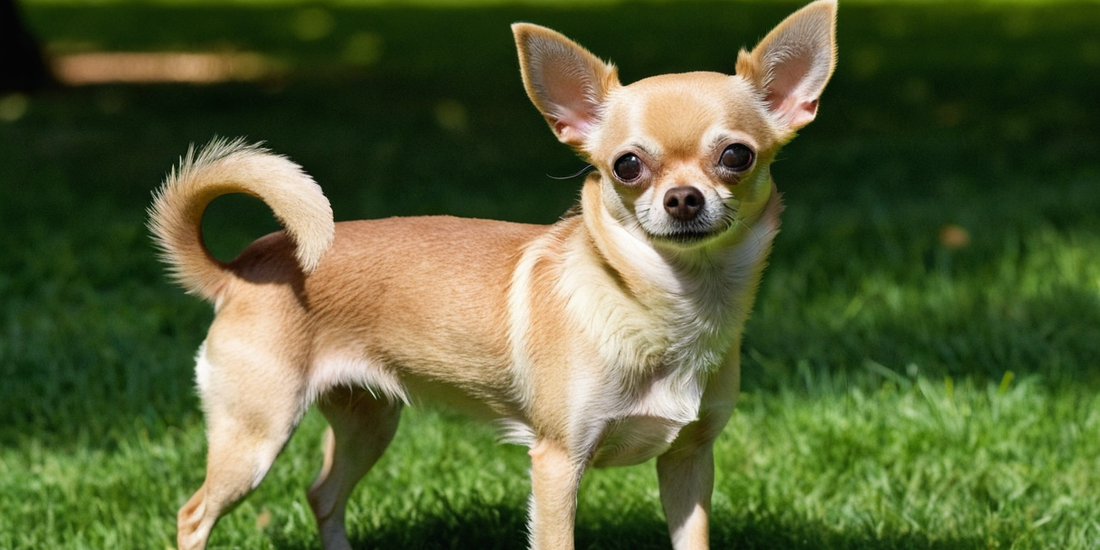
The Chihuahua diet sets owners a particular challenge: the world's smallest dog needs food matched to its tiny stomach, fast metabolism and often sensitive digestion. Anyone who knows what matters when it comes to Chihuahua food saves themselves a lot of frustration, since getting it wrong shows up quickly in this breed as intolerances, excess weight or dental problems. In this guide you'll find out what a Chihuahua really eats, how to keep its teeth healthy, and which chews suit its size.
The Chihuahua at a glance: small dog, special requirements
Weighing often only one to three kilograms, the Chihuahua is among the smallest dog breeds there is. This very tininess brings with it a few characteristics that play an important role in its diet. Small dogs have a faster metabolism than large breeds and need more energy per kilogram of body weight. At the same time, their stomach is so small that large portions simply don't fit. This means every meal has to deliver as many nutrients as possible in the smallest amount of space.
Character-wise, Chihuahuas are considered alert, affectionate and sometimes a little nervous or sensitive. This sensitivity often shows up at mealtimes too: many Chihuahuas are picky eaters who react sensitively to diet changes or simply refuse certain ingredients. Anyone who knows their dog's preferences while also paying attention to a high-quality, single-protein composition has already won half the battle for stress-free feeding.
In addition, small breeds like the Chihuahua are particularly prone to tartar and gum problems, since in their small jaw the teeth sit more closely together than in large dogs. Dental care in this breed is therefore not an optional extra but a fixed part of daily feeding.
The right food: nutrient-dense, portioned, grain-free
With Chihuahua food, it's less about quantity than about quality. Since the stomach is so small, every ration should contain as much high-quality protein, healthy fat and important micronutrients as possible, without burdening the dog with unnecessary fillers. Grain-free food has proven itself with many small and sensitive breeds because it's easier to digest and lowers the risk of intolerances. A grain-free dry food with a single protein source delivers the necessary energy density in the smallest space and can be fed in precisely measured small portions.
For Chihuahuas that need to drink plenty or have a sensitive stomach, a high-quality wet food is a good addition or alternative. It provides extra fluid, is usually particularly gentle on digestion, and is often accepted more readily by picky eaters than dry food. What matters with both options is a single-protein recipe, meaning a single animal protein source per variety. That way you can quickly tell which food your Chihuahua tolerates well and which it doesn't.
Poultry such as chicken or turkey is considered a particularly digestible and lean protein source for small breeds. In our poultry range you'll find correspondingly easily digestible products well suited to the everyday needs of a small, sensitive dog. If you're unsure which food suits your Chihuahua, the Food Finder helps you get a suitable recommendation in a few steps, matched to your dog's size, age and individual needs.
Also make sure to keep fixed feeding times with several small meals rather than one or two large portions a day. Especially in puppies and very small adult dogs, this prevents hypoglycaemia and keeps the sensitive metabolism stable.
Dental health: why chews are so important for small breeds
Hardly any breed suffers from dental problems as often as the Chihuahua. The reason lies in its narrow jaw: the teeth sit closer together, so food residue and plaque build up faster than in large dogs. Left untreated, this can lead to tartar, gum inflammation or, in the worst case, early tooth loss. That's why targeted Chihuahua dental care belongs in every feeding plan.
Regular chewing supports natural dental cleaning by mechanically removing plaque while also stimulating saliva flow. This only works, however, if the chews match the small jaw in size and texture. Chews that are too large or too hard quickly overwhelm a Chihuahua or are simply avoided. Natural chews developed specifically for small breeds, thinner and softer, are the better choice here, as they can be worked with the small bite without overtaxing the teeth.
Air-dried chews without additives are particularly suitable for Chihuahuas, as they're gently processed, easy to digest and free from unnecessary preservatives or flavourings. This way your dog gets natural dental care that also serves as a healthy reward.
Suitable chews for very small dogs
Not every chew is suitable for a dog weighing just one to three kilograms. For Chihuahuas, small, thin and softer snacks are particularly recommended, ones that can be chewed with little effort while still providing enough chewing time. The following have proven effective, among others:
- Chicken feet, which are thin, cartilaginous and easy for small jaws to manage
- Chicken hearts as a protein-rich, soft snack that usually wins over even picky eaters
- Lamb ears, thin and easy to chew, yet rich in natural nutrients
- other thin, single-protein chews without additives that are specifically suited to small breeds
It's important to always keep an eye on your Chihuahua while chewing, remove small leftover pieces in good time, and adjust the amount to its small body size. A single small chew is often enough for a whole chewing session, and at this weight rarely more is needed. If you're unsure which size and hardness suits your dog, the Chew Finder can help you find Chihuahua chews in the right category.
In between, small, soft natural treats are also fine, for example for training or as a small everyday gesture. Here too, look for single-protein, grain-free recipes so that rewards don't negatively affect a sensitive stomach.
Sensitive stomach & picky eaters
Many Chihuahuas react sensitively to certain food ingredients, whether with soft stools, itching or loss of appetite. An intolerance to individual protein sources or additives is often behind this. Before you can be sure what your dog tolerates, a so-called elimination diet can help: for this, you feed exclusively a single-protein food with only one protein source for a few weeks and observe how your Chihuahua reacts. If symptoms clear up, you gradually reintroduce new ingredients one at a time, allowing you to find out which components are problematic.
For this phase, single-protein varieties from our dry food range or wet food range are particularly suitable, since it's clearly traceable which single protein source ends up in the bowl. Important: carry out an elimination diet together with your vet if in doubt, especially if your Chihuahua is already showing clear symptoms.
With picky eaters, too, patience is worth more than constantly switching food. Frequently changing variety can further irritate a sensitive stomach and makes a dog all the more fussy. Stick with a well-tolerated, single-protein recipe and vary the protein source only occasionally at most, once you know what your Chihuahua tolerates.
The Chihuahua puppy & the senior
Chihuahua puppies grow quickly and, during this phase, need particularly nutrient-dense food with enough energy, high-quality protein and important minerals for bone development. Since their stomach is even tinier than that of adult dogs, several small meals spread across the day are recommended to prevent hypoglycaemia, which can occur quickly in very small puppies. Chews should be especially soft and thin during this phase so as not to overtax the still-sensitive milk teeth.
In old age, requirements change again. Older Chihuahuas often move less, which lowers their energy needs, while the need for easily digestible, high-quality protein remains to maintain muscle mass. At the same time, dental problems often increase with age, which is why soft, easily chewable chews and, where needed, moistened dry food or wet food can make sense. Watch your senior Chihuahua closely: if it suddenly eats less or avoids chewing, this can be a sign of dental or gum problems that should be checked by a vet.
Frequently asked questions about Chihuahua diet
What does a Chihuahua eat best?
High-quality, single-protein, grain-free food with a single animal protein source, fed in small, nutrient-dense portions several times a day, is best. This way the small stomach isn't overloaded while the high energy requirement is still met.
How often should a Chihuahua eat per day?
Due to the small stomach and fast metabolism, two to three small meals a day are usual for adult Chihuahuas; puppies often need even more frequent but smaller portions to prevent hypoglycaemia.
Which chews are suitable for Chihuahuas?
Small, thin and softer chews such as chicken feet, chicken hearts or lamb ears are ideal, as they can be worked well with the small jaw while also cleaning the teeth naturally.
Why are Chihuahuas so prone to dental problems?
The narrow jaw means the teeth sit closer together than in large dogs, allowing plaque and tartar to form more quickly. Regular chewing matched to size counteracts this in a targeted way.
Character & who the Chihuahua suits
In short, the Chihuahua suits best: singles/seniors, city living, a small companion.
- Size: small
- Energy level: calm
- With children: good with children
- Flat living: suitable for flats
- For beginners: with some experience
- Coat care: medium grooming effort
- Trainability: moderately eager to learn
- Alertness: alert
Not sure whether this breed suits your life? Find out with our Breed Finder "Which dog breed suits me?".
Goes well with: Natural chews





