
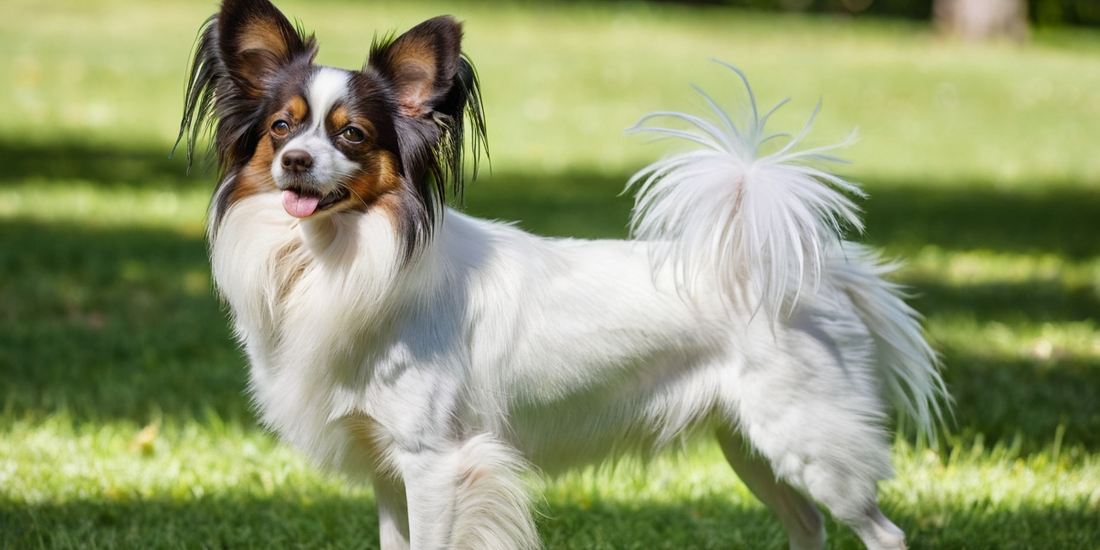
With his enchanting butterfly ears, the Papillon is one of the most striking small dogs of all, and beneath that pretty exterior lies an exceptionally clever head. It's precisely this combination of tiny build and great intelligence that turns Papillon nutrition into a small science of its own: the food must be nutrient-rich, well tolerated and portioned in the right amount so that your small companion stays fit, balanced and mentally sharp. In this guide, you'll learn what really matters when it comes to food for the Papillon, which training treats suit his alert mind, and how to keep his teeth healthy from an early age with the right chews.
The Papillon in profile: small butterfly, clever head
With a shoulder height usually under 28 centimetres and a weight of between 3 and 4.5 kilograms, the Papillon belongs to the toy breeds. Despite his dainty build, he is anything but a pure lapdog: Papillons are considered one of the most intelligent dog breeds in the world, often learning new commands after just a few repetitions and loving to be challenged. This mental alertness goes hand in hand, in many members of the breed, with a certain sensitivity. Papillons react attentively to their surroundings, can appear nervous under stress or uncertainty, and therefore need not only physical but also mental balance. A well-thought-out diet is an important building block here, as a dog whose blood sugar and energy levels are stable stays calmer and more focused than one that constantly swings between hunger and a sugar high.
The right food for the Papillon
Because a Papillon is so small, he also has a correspondingly small stomach. This means he can only take in a little food per meal, yet he has the same need for vitamins, minerals and high-quality protein as larger dogs. Food for the Papillon should therefore be especially nutrient-dense, so that he gets everything he needs in a small space without being overfed.
Nutrient density instead of large portions
Instead of two large meals, many Papillons benefit from three to four smaller portions spread throughout the day. This keeps the stomach from being overloaded and keeps the energy balance more stable. Make sure that both dry food and wet food contain a high proportion of high-quality meat rather than being padded out with fillers. A single-protein recipe with just one protein source is often the more tolerable choice, especially for small, sensitive breeds like the Papillon.
Feeding grain-free
While grain does provide energy, it's harder to digest for many small breeds than easily digestible carbohydrate sources such as potato or sweet potato. A grain-free food relieves the Papillon's sensitive digestive tract and can help prevent flatulence, soft stools or itching, which occur more often in small dogs than in large breeds.
Avoiding low blood sugar
Toy breeds like the Papillon have an increased risk of hypoglycaemia, or low blood sugar, particularly as puppies. This is due to their low body fat percentage and small energy reserves, which are used up quickly. Regular, small meals spread throughout the day are key here: never leave your Papillon without food for too long, especially during the growth phase or after a lot of exercise. A small snack in between can be useful at these moments and can also serve as a training reward.
Training treats for a clever mind
Because the Papillon is so eager to learn, it's worth specifically fostering his intelligence, whether through basic obedience, small tricks or agility, which many Papillons pursue with visible enthusiasm despite their small size. Training calls for Papillon training treats that are small enough to be swallowed in a split second without overtaxing his small stomach.
Lean, single-ingredient snacks that can easily be broken into tiny pieces are ideal. Dried beef jerky or an air-dried beef snack can easily be broken into small morsels and provide high-quality protein without unnecessary additives. Chicken hearts are also popular with many Papillons: they are small, lean and naturally high in protein, making them just right for many short training sessions in a row. It's important that training treats are made purely, without sugar, salt or flavourings, so that even with frequent use they don't put a strain on your Papillon's sensitive metabolism. You'll find a good overview of suitable natural treats in our range, from which you can choose the right size and texture depending on the training situation.
Dental health in small breeds
Papillon teeth deserve special attention. As with most small breeds, the teeth sit close together in a comparatively narrow jaw, which can encourage tartar and gum inflammation. Without regular dental care, plaque and tartar can build up faster than in large dogs, which can lead to gum problems in the long run and, in the worst case, tooth loss.
Alongside mechanical tooth cleaning by the vet or with a toothbrush, regular chewing is one of the most natural forms of dental care. Chewing mechanically cleans the tooth surface while also stimulating saliva flow, which in turn helps reduce bacteria in the mouth. For a jaw as small as the Papillon's, it's crucial that chews are offered in the right size and hardness, as pieces that are too large or too hard can damage small teeth rather than care for them.
Suitable chews for very small dogs
When choosing the right chews for the Papillon, the rule is: small, soft to medium-firm, and without unnecessary additives. Deer skin is a good option for small dogs, as it's thin, easy to chew and yet robust enough to keep him occupied for longer without overtaxing the jaw. Horse liver is also suitable in moderation, as it's very nutrient-rich. Because it's also fairly calorie-dense, though, it should be used sparingly for the lightweight Papillon rather than as a daily chewing treat.
As a general rule: the smaller the dog, the more important the right size of chew becomes. A piece that would be harmless for a medium-sized dog can be too large, too hard or simply too much at once for a Papillon. In our chew finder, you can filter specifically by size, hardness and breed to find chews that really suit your Papillon. You'll also find an overview of our complete range of natural chews in the shop, single-ingredient, grain-free and air-dried without additives.
Sensitive digestion: when the Papillon reacts sensitively
Some Papillons react sensitively to certain food ingredients, which can show up as symptoms such as itching, recurring ear infections, soft stools or vomiting. Since the Papillon has a small, sensitive digestive tract to begin with, it's worth systematically narrowing down the cause when problems persist, rather than simply trying the next food.
A proven method for this is the elimination diet: over a set period, only a new protein source that hasn't been fed before is given, combined with a single carbohydrate source. If the dog tolerates this without issue, further ingredients can then gradually be tested to identify the trigger or triggers. We explain how such an elimination diet works in detail, and what to watch out for, on our page about the elimination diet.
The Papillon puppy: special attention in the first few months
Several particular factors come together with the Papillon puppy: although he won't grow very large overall, he still needs plenty of energy and nutrients in the first months for growth, skeletal development and a strong immune system. At the same time, the puppy in particular is especially prone to low blood sugar, as his body hasn't yet built up large energy reserves. More frequent, small meals are therefore even more important at this stage of life than for an adult dog.
When choosing puppy food, look for high nutrient density, a suitable calcium-to-phosphorus ratio for the small, rapidly growing bones, and easily digestible ingredients. You can also start training early, as the Papillon puppy's clever mind is already receptive to simple commands in the first few months of life. Small, soft training treats in tiny portions are ideal here for rewarding early successes without overtaxing the small stomach. If you're unsure which food best suits your puppy's age and needs, our food finder can help you choose.
Frequently asked questions about Papillon nutrition
How often should I feed my Papillon?
Because of the small stomach and the risk of low blood sugar, three to four smaller meals a day suit most Papillons better than two large portions. Puppies benefit from even more frequent, small meals.
Why should Papillon food be grain-free?
Grain is harder to digest for many small, sensitive dogs than alternative carbohydrate sources. Grain-free food relieves the digestive tract and can help prevent problems such as flatulence or itching.
Which chews are suitable for such a small dog?
Small, thin, soft to medium-firm chews such as deer skin are ideal for the Papillon. Calorie-dense snacks like horse liver should only be offered in moderation so as not to upset his low body weight.
How do I recognise if my Papillon doesn't tolerate his food?
Typical signs include itching, soft stools, frequent ear infections or vomiting. If problems persist, a structured elimination diet can help identify the triggering ingredients.
Temperament & who the Papillon suits
In short, the Papillon is best suited to: active small-dog fans, very eager to learn, fine for city living.
- Size: small
- Energy level: medium
- With children: very good with children
- Flat living: suitable for flats
- For beginners: suitable for beginners
- Coat care: medium grooming effort
- Trainability: very eager to learn
- Alertness: not a pronounced watchdog
Not sure whether this breed suits your life? Find out with our breed finder "Which dog breed suits me?"
A good match: Grain-free dog food





